Friday, February 26, 2016

CORRELATIONS: Canaries in the Gold Mine


I found these graph…and they are fascinating!

We live in a world where everything is quantified. Metric measurement is more than a pastime. It is the Present time. We long to find meaning within meaning and to decipher the basis of existence itself. So bent in this stream of consciousness, we find correlations that give us the necessary tools to go on. To go on where, though? Where is there, and why do we need to go there? Indeed, simple as this looks, the go-between prism of simple deception is embedded in this art of the present culture. Using a sophisticated illusion of coruscating colors and mathematical correlates a graph of believability and a propagandist, moralist and a prophet is born. A great enchanter uses form, style and the magic of his or her statistical genius to convince others.


What exactly does the first graph represent? Let us break it apart at the spine and unhinge the very concepts it purports to appoint into our consciousness. Or simply smash through the paper-lined facade!


On its face it is obvious; the U.S. costs is an outlier and as you traverse the landscape, you find that the costs do not equate to the life expectancy. “Oh my!” one would exclaim, “That is travesty!” But is it?


Lets break down the issues one by one:

First allow me to bring into focus the Life expectancy, of select countries data below to illustrate the point...

Country Life expectancy Median Age Birth rate/ 1000
Japan
84
47
9
Spain
83
42
11
Switzerland
83
43
10
Italy
83
45
9
France
82
41.5
13
Canada
82
42.1
11
Norway
82
40
13
Sweden
82
42
12
Germany
81
46.7
8
United Kingdom
81
41
13
Denmark
80
42
11
United States
79
37
14
Poland
77
39.6
11
India
66
27
22
Uganda
59
16
45
Sierra Leone
46
19
39


YELLOW: Birth rate/1000, GREEN: Median Age, BLUE: Life Expectancy

As you can clearly see based on these Life expectancy and Median age data that there is a correlation between the two. In other words as the Median age goes up so does the Life Expectancy. Makes sense, doesn't it?
The baby boomers in the western nations are aging rapidly and the advancement in science and overall Public Health measures have drastically reduced the early age mortality causes significantly. And that is a good thing. As the Median age advances a larger cohort of baby boomers will enter the next decade of existence thus raising the Life expectancy with it. See for instance the difference between the first 11 countries and their median ages and then the United States. It is obvious that as the median age increases to 42 that is 5 more years then the present the United States Life Expectancy will rise 5+ years as well, bringing it to the 84+ years.

See here: http://www.nationmaster.com/country-info/stats/People/Median-age/Total

There is another piece that needs to be fitted into the mix and that is the birth rate. Increasing birth rate leads to reducing the median age as the newborn pull on the median age to the left side a bit. If the birth rate in Japan and the rest of the European Union continues to decline as is evident today, (thus Germany’s need to import outside workers) and the median age advances more rapidly the Life Expectancy will rise even faster. Human beings survive not from seeking or taking medicines but from self-governance with healthy lifestyle. In the United States if the Birth rate continues to exceed that of the EU nations the median age will rise slower, hence the Life expectancy might take time getting to the Japanese Shangri La.

Now let us look at Costs:


In healthcare costs,  the United States is definitely an outlier. Of that there is no question. But what exactly is the genesis of these high costs. Is it Medical Care? Is it the cost of examination, interpretation, treatment (Medical and Surgical) and management of acute and chronic illnesses? There is the essence of the economic costs breakdown…


If one looks at the Bureau of Labor Statistics, one comes to an understanding that the direct increase of costs is something other than those issues outlined above. In this graph the real increase in costs seems to be the middle management that promulgates policy and oversees such policy measures and not direct patient care itself!  It appears that there are way too many overseers, who do little except to keep their own job secure. 


Do you still think that the Cost of healthcare is correlated to the Life Expectancy to the extent advocated by the "experts"? Still? Not convinced yet?

The argument posed by the middling managers is that physicians are not to be trusted in providing good medical care therefore the need for such oversight. Really? How exactly does the oversight help? Apparently if one were to use this argument then the cost of care has really not budged the needle in the direction they themselves think it should have.

Is that the failure of their argument?

Given another decade or two the median age in the United States will climb due to the booming boomers, will these experts claim that their measures in healthcare policy have lead to a increase in Life Expectancy and therefore their presence is justified, appropriate and necessary? All one has to do is look at the evidence and then figure out the bogus nature of the argument. Yet look a decade ahead and if business is as usual, the headlines will proclaim their pseudo-virtue.

And then there are the Insurers...
As long as the premiums can go up and capital outflow can be kept to a minimum by denials of claims and delayed payments, well then life is good until it no longer is...


The thread still finds the needle to sew the perfect fabric; Risk nothing and Reward from everything as in this graph below...

If you were thinking that there might be a correlation between the Consumer Price Index (in Health) and the Health Insurance premiums? Well you guessed it, there is... But oh there is a divergence, how can that be?

Is there any wonder that the middle class average U.S. citizens are having a real problem in meeting there medical expenses...
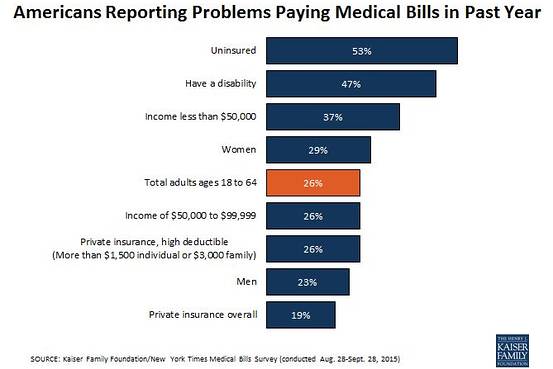
There are a varied number of graphs about healthcare system waste...here is one of them:


But they seem to point to the flagrant increase of physician incomes. Is that so? Look here...


There seems to be discrepancy in what they, the experts and middling managers at some private, political and governmental levels, say about how the physicians are the cause of the whole healthcare cost problem and yet there is this...


The graphs below are interactive and show the overall decline in the young population and a rise in the elderly population and various OECD nations. Enough said!

Now you must be able to see that the canaries in the gold mine are the patients and their physicians. While the miners are wearing top-hats!


Saturday, February 20, 2016

A CURIOUS CASE OF OPPORTUNITY COSTS


Opportunity Costs of Free Capacity

I find the business terminology interesting. So before much ado, let me define the two terms to make what follows easier to explain.

Definitions:
Opportunity Costs:  The loss of potential gain from other alternatives when one alternative is chosen
Free Capacity: Portion of resource-time not allocated to any customer's order or job.


Private companies are fairly efficient in utilizing their employee time, unlike the public domain. Private companies have to concern themselves with the loss of opportunity if they choose the wrong path, widget or product in the market place. The loss of time, resource and space in that exercise could easily have been utilized in another far more lucrative endeavor. This then is the essence of opportunity costs; costs that could have been put to better use for better outcomes.

Private companies also use their Free Capacity to enhance their productivity. This can be managed by fostering higher education for their employees, seminars in efficiency, seminars in personal resource management, seminars in six sigma, etc. All these mechanisms are designed to help an employee grow in the company and achieve better results both in productivity and quality of the product the company produces.

In these product or productivity improvements lies the inanimate material molding to form a widget but not the currency of a living body’s mechanisms. Now let me take you into the discipline of medicine where the business industry has taken over the nobility of this profession but in the process has forgotten its own all important tenets.

A physician’s Free Capacity is mostly diverted into thought and then into action. The former precedes the latter in time. Physicians on the whole while taking caring of their patients spend an inordinate amount of time thinking through the process of the pathology within the patient and the nature of the nurture that has transformed that patient’s condition. This thought fills the crucible of a physician’s wisdom. The action that emanates from the rising ethereal wispy clouds of thought is the essence of the care provided to the patient. Every patient is a different dilemma, even though he or she may have the same type of illness; a diagnosis of pneumonia or appendicitis or diabetic vasculopathy or cancer. How to treat is an amalgamation of the resources, a collection of evidence a musing over possibilities and potential of probabilities and the collection of experiential wisdom over time I mentioned earlier. This then is the Free Capacity inherent in the limits of a physician’s time. There are no “reimbursements” for this Free Capacity, no logs to fill, no boxes to check. It is Free Capacity because it is the motion of internal thought unencumbered by wasteful moments. This is the healer at work. This is the maestro directing the orchestra with the many shades of nuance within a symphony. This is the batter in the batter’s box waiting for the pitcher’s delivery.


Now we add to the physician’s lair a multiplicity of useless arguments; filing for preauthorization from the insurance companies to better understand the patient’s pathology, filling forms, clicking on the computer, checking boxes, copying and pasting data, spending time arguing with insurers for getting paid for services already rendered, adjusting for denial claims, wasting time over audits, meeting the challenges of “less is more,” and “Choosing Wisely,” or wasting time for a continuous certification requirements as mandated by the ABIM (American Board of Internal Medicine) with purported potential detriment to the patient and the physician. You might see that there is opportunity costs related to this wasted time. That the opportunity cost here is huge; it is the very immersion of thought in the patient care itself that is being violated. It is what makes us physicians, physicians. It is what defines us as humans. Inordinate and unnecessary burdens leech out strength eventually. 


Something will have to give!

Consider then that these useless actions as mandated by the experts who in large part also happen to be in the business world, are promulgated by the very people who define efficiency.  They are stifling thought in search of nirvana health based on a binary concept of good and bad. They are placing burdens on both patients and physicians and then using arbitrary metrics of “value” and “quality.” The very attempt distills down to dollars and cents, because that is what business people do best for themselves.

Somewhere the train of thought has been derailed. The last champion of the thinking mind is rendered a voiceless dregs of the society. Such continuous fatigue leads to wistful despair. The enterprise of form now controls the engine of function.


“With this regard, their currents run awry, and lose the name of action.” - Shakespeare

Monday, February 15, 2016

"TREAD SOFTLY..."


Somewhere in the outskirts of time, when shadows were short and dreams were long, a man came to me. He was looking for solace and comfort. he stayed a long while. He was a mild mannered man with graying side burns, a full head of hair and a quick easy but soft muted laughter. The timbre of his voice varied to the moment of his thought; from a quiet whisper to complete domination of a four walled chamber. He had a limp, a slight one on his left side and his body tilted a little in that direction. He was neatly dressed and always through the time I knew him, he presented himself as a perfect gentlemen. But when he spoke, oh my, when he spoke, he could mesmerize you. The gentle cadence in his voice and the impeccable words that he used arrested any thought of arrogance within his eyesight.

He told me, he had a “malady of sorts, something to do with the blood,” he recalled. I studied his documents that he had proffered and found the riot in his blood that had him seeking solace. The riot was a white cell problem; the plasma cells had overtaken the production machinery in his bone marrow. His, was producing a variant of the white cell called “plasma cell” from a renegade template. This wayward production was overtaking the capacity of the other normal cells that were needed for normal daily living. The dysfunctional clone of plasma cells were on a rampage, unwavering and resilient. And so he grew weaker in the flesh but stronger and more focused in the mind as the white cells took over and made him weak from the relative paucity of the red blood cells.

But that was many years ago. We, he and I, had reversed the process and contained the plasma cells from growing in their manic phase and checked their growth and contained them much before their prohibitive limit. He would come periodically and I would pat him on his back after studying his blood under the microscope. We elected to reserve the bone marrow testing only when there was an absolute change in his condition warranting it. The now had recently happened.

He was single, never married and lived quietly in a modest home. I visited with him one day on his invitation, to find a catalogue of literary books and models of schooners, sloops and ketches adorning his living room; a modest small room with sparse furniture, except for the heavy wooden book cases that travelled across the walls into different rooms, filled with books.

The day had come for decisions and he being weak and frail required the “mountain” to come to him, as he called it. We sat awhile quietly, both taking in the ambience. He thanked me for coming and offered me a beautifully constructed model of the HMS Victory as a token of friendship. I declined. He said, I realize my time is short now, but I do have an important piece of work yet to finish. And then in a quiet but audible whisper he said,

“I would spread the cloths under your feet:
But I, being poor, have only my dreams;
I have spread my dreams under your feet;
Tread softly because you tread on my dreams.”

Perplexed with the choice of the quote, I looked up at him. Had I trampled on his dreams before? had I not done everything based on his wants and needs? He looked at my discomfiture and said, “Thank you doctor, my friend, you have given me comfort and many years of good living. I just want to live for a short while more, till the end of the year to finish a project.” I hurried to alleviate his anxiety and he held up his hand slowly but determinedly. “I know, I know, what you will say, for it is difficult for you to lose a friend as much as it is for me, but promise me comfort for the remainder and nothing more.” I promised.

We had tea that he prepared in a teapot, letting the tealeaves simmer in the heated water bubbles, lending the entire agency the color of rust and the aroma of far away places. He poured the tea with a slight tremor in his right hand. He limped slowly across the room and would not take any assist from me. He sat down finally a little shy of half his energy, but his eyes remained alert and piercing, shaded below the overhang of his thick eyebrows. He looked steadfastly at nothing in particular, staring at the books in the bookcases. We sat sipping from our respective cups in silence until he broke with his voice,

“From this day to the ending of the world,
But we in it shall be remember'd;
We few, we happy few, we band of brothers;
For he to-day that sheds his blood with me
Shall be my brother…”


He smiled and then continued, “Henry the fifth does use some… rather deliberate and provocative words like bloodshed, doesn't he?” he questioned and then momentarily continued, “But you are a brother to me on this, my Saint Crispin’s Day and for that I thank you.”

I left his house that evening, filled with anguish and with a strange feeling of comfort. The anguish about a promise that I had to keep and the comfort from finding such peace in the way he wanted to spend his last few days on earth by inviting me, his physician, into his house and calling me his friend.

He died several weeks later when the shadows had lengthened and the air had turned crisp with clarity and speed. He remained home in the comfort of his bed surrounded by the love of his life, his books.

I remember him, his dignity in life and dying, in the quiet resoluteness of his determination through the turmoil and chaos of the disease and in the comforting, unwavering peace of his decision. He was a remarkable man, worthy of emulation of his kindness, eloquence and simplicity. He left behind his fortune to his relatives, to the local library and to his alma mater. It was a large sum, as mentioned in a publication from the university.

I remember to this day, a lesson he taught me that repeats in my mind, when I see a person in distress, his voice gently echoing W. B Yeats, “Tread softly because you tread on my dreams.”

Sunday, January 24, 2016

OXYGEN AND FLIGHT

As humans we depend on energy. Our energy is created in little biological machinery present in the cells called mitochondria. these tiny powerhouses generate phosphates from converting (Adenosine Triphosphate or ATP) to Adenosine Diphosphate or ADP). phosphate groups are needed to move cells within organs to do their jobs, example muscles to contract (locomotion) hearts to pump, kidneys to filter, livers to digest and brains to process information. Absent phosphate and we are looking at an abyss. Oxygen is needed for the generation of the phosphate groups, hence the importance of this element in all things governed with "life.


Oxygen, the quintessence of all elements breathes life into living creatures. Without it there is no water, nor breathable air, nor the lusty energy that makes us want to fly.

The breathable air contains 20.946% Oxygen. Humans exchange carbon dioxide for oxygen to replenish the stores of renewable energy for every one of the trillion cells that make us. This energy is in the form of Adenosine Triphosphate (ATP). ATP releases a phosphate group that acts as an energy bar for the cell to chew on so that it can accomplish its functions. These functions include manufacturing proteins, hormones, keeping the integrity of the cell wall etc. From our aviation point of view the function that cannot be clouded is the brain activity. The brain weighs about 3 pounds and consumes 25% of the oxygen supply. The brain’s hefty consumption is a testimony to its integrated and creative functions. 100% of the brain is at work 100% of the time and it needs its constant and uninterrupted energy supply.

The rarified air at altitude has reduced content of oxygen, which causes our brains, first to compensate by increasing blood pressure, then the respiration and heart rate to maintain the steady oxygen supply. When oxygen levels lower further, portions of the brain function capitulate, akin to losing the alternator, one reduces power load by keeping only the most important instruments on the panel active so as not to drain the battery. So flying in un-pressurized aircraft without oxygen, your cognitive skills diminish. Your communication and math skills suffer as do interpretative skills. Missing calls, airway intersections or flying into adverse conditions becomes possible. To unscramble the brain a little oxygen rich air is mandatory. A “Chamber Ride” at an aviation facility confirms this.

Remember an intensely low oxygen level for a short time or a low-level prolonged oxygen restriction can have similar short term and long term consequences on cellular behavior.

If you fly above 5000 feet at night or above 8000 feet during the day use oxygen. It is good for the cerebral soul.


Think about these problems reading this on the ground than in the air:
1.      Mathematics
Skill deterioration
2.      Cognitive Skill deterioration
3.      Instant Recall diminished (Frequency recall)
4.      Remote Recall diminished (experiential references)
5.      Decision Making Skills deteriorate (Time, distance and fuel consumption)
6.      Risk Assessment Impaired (eg. Go, No go decision into weather)
7.      Physical functional Impairment (muscle weakness)

8.      Lethargy/Fatigue.

Sunday, January 17, 2016

CANCER MOON SHOT


Truly a remarkable call for action; A Cancer “moon shot.” It is worth about $2 Billion and purports to cure cancer. It has the faint echo from some thirty years and tries to mimic the “landing on the moon” challenge proposed by President Kennedy. 


The difference between landing on the moon and the “cancer moon shot” is one of technology and biology. Whereas technology is based on referential absolutes of certain laws, aerodynamic and physics, biology has no such laws etched onto its book covers. Try as we might using arbitrary metrics of measurement and outcomes, the cancer moon shot terminology is one of jumping the shark. 

Ok, I have to admit that even with the success of finding the right trajectory of the rocket to reach the moon based on the earth’s circulation and orbital path, a malfunction in the carbon dioxide scrubber can create spectacular drama. Other times a space travel can be cut short by the frozen “O” Rings (hazard) and the peeled away tiles (another hazard) off the space shuttles. Barring those events that have been understood and placed in the “Risk categories” the flight to ideas into space travel continues successfully. The travel to the Moon and Mars and flying weightlessness in space are a thing of the present with known knowns.

Now drifting off to the biology related issues, we are faced with a myriad of problems; the most certain being; indeterminate end points or outcomes. Let us take the cell as the primary focus of our attention for the moment. Each cell from each organ is faced with a diversity of external pressures. A stomach, for instance, learns to live with the Helicobacter Pylori bacterium causing peptic ulcers in some all the way through chronic inflammation and cancer of the stomach in others, but not in all. Not all humans are affected equally. The bacterium finds solace in some as a subdued accomplice (saprophyte) and in others as a deadly weaponized life-form? Why so? 


The landscape of lung cancer is also changing as we speak. Squamous cell type lung cancer once in majority as a form of Non Small Cell Lung Cancer initiated by smoking and other external pollutants seems to have given way to an Adenocarcinoma NSCLC sub-type increasing from 8.9% to 19.5% over the past 6 years. Interestingly this form is increasing in women-never-smoker category. Why so? Is it the transposon function playing through the generations as the sperm and ovum date? 


Or let us look at something called GUCY2C receptor anchored by the Guanylin hormone, which appears to protect humans from colon cancer. Obesity seems to stem the function of the GUCY2C receptors and thus the normal proliferation of the colon cells goes awry. The dysfunction of the GUCY2C receptor seems to correlate well with weight gain and obesity. But what happens in lean individuals who develop colon cancer? What is the trigger there? There are other mechanisms in play, for sure; including the Lynch Syndrome, Inflammatory diseases of the colon etc. So there are many paths that lead to cancer formation in the colon. The next question then is, is there a final common pathway where arrests can be made to prevent the unholy and tortuous realm of malignancy so that the “cancer moon shot” may find success? Maybe, but (groan) there are many upstream and downstream pathways within the cellular interior, teaming with cross-talks (between pathways) within cellular signaling in force, to offset any specific targetable site. And just so we understand that the final common pathway if successfully arrested, might also lead to normal cellular function. 


Another disturbing point of view is the heterogeneity of the cancer itself. Recently shown in Multiple Myeloma, where sub clones of the Myeloma cells exist within the same patient. Each sub-clone has a different set of mutated genes, some subtle, some overt and others manipulated through the epigenetic realm. These sets create the same havoc from sheets of plasma cells that cause fractured bones, kidney failures and other assortment of maladies on us, humans.

You might be able to see this non-linear malady a bit clearer. It is truly a dilemma crafted from the inherent variability of the cellular function. The cellular functions are like a flower blowing in the wind, as it holds on to its petals only to be lost in a gale event. From the seeds scattered by the gale-force breezes, mutated seeds give rise to a multitude of colored flowers and each bush with its own might, beauty and future. The gales or hurricanes can come and go and be of any intensity but the effect is never the same. Each iteration of exposure to hardship lends itself to a newness in the genetic structure and signaling. Robust flowers are borne of harsh climates and delicate ones arise in moderate climes. The mutation goes on and the targets keep varying in expression. A cancer thus has many facets to its etiology even in the same organ and the delicate balance of norm is upset by factors inside as well as outside of its milieu.


“Moon Shot” the so-called precision shot to a known celestial body, where the trajectory and orbital paths are known is a cinematic presentation for the mind’s eye in trying to capture the imagination. A well-meaning concept that attempts to target a moving target. Given the gravitational pulls of the various heavenly bodies viewable by naked eye, curing cancer with the moon shot is more like a shot in the dark. And shooting in the dark where the dark matter has its own set of rules creates another blind eye’s dilemma.

The $2 Billion outlay added to the NIH budget, may and probably will find a few new oncogenes or epigenetic pathways, tumor suppressor genes or other epiphenomena and with those, tiny blind alleys in the process, but will they give us an atlas to the cure for cancer? I have doubts. But some progress in the oncology field will be made, of that I am certain. Progress, means more alleys and pathways down the rabbit hole.

Friday, January 8, 2016

IN WHOSE INTEREST?


In Whose Interest is all this anyway?

Cleverly we design our future. Softening the lights to reduce the shadows. The soft haze beckons us and we follow suit dutifully in line.

Sometimes a question arises. but most times the question is drowned out by fear. The question is “In whose interest is any of this, anyway?”

The trumpets have heralded that all things arriving in the form of gratis are from a benevolent master. And the benevolent master with a tearful eye informs that all things meted out are for the “Public Good.” Indeed the writers write, the bobble-heads on television agree with thrills up their legs and all is a calm sea of bright azure blue.

Is it?


Let us take the mundane but hotly contested yet relentless issue of the EMRs for physicians. The digital interface is designed and promoted as the coming of age in medicine for the “public good.” Touted that the EMRs would lead to portability of patient data and therefore less chance of medical errors. But that is not what happened. The error rate in some cases increased. However there was a bonanza for cyber-charlatans in stealing multi-million patient information. The insurers using it to determine who was being reimbursed and how much, created alternate realities of abuse and through it all the face time, eye-to-eye contact between patients and physicians decreased dramatically. The questions from the physician to the patients were directed at the computer screen in an attempt to reduce the time impact in order to fulfill their goal of filling the boxes and crossing the “t”s and dotting the “i”s to the agencies. The alienation between the patient and physician increased. And as a consequence the “Satisfaction Scores” for physicians took a dive. The dominoes of interests however continued to erect themselves. Software and hardware companies like EPIC and CERNER made billions in the process through government subsidies and contracts. Meanwhile the payments to the doctors dwindled substantially. The declining incomes combined with the will to keep their offices open sent many a doctor to the banks for loans, others to leave the field of medicine and still others into depression.

In whose Interest was the EMRs?


Another commonly used belief that is the care of the patient should be based on the population medicine statistics; a new paradigm. let us dissect that one a bit. Imagine if you will that we take a sample of data from a cohort of patients in a urban hospital or two or three and then based on the statistics conjure up a reality that treatment ‘x’ worked in that sample in, lets say 2/3rd of the patients, would that be appropriate for the entire population? If from that tiny experiment of say a 1000 (the world population is 7,100,000,000) we extrapolate that treatment ‘x’ is the best treatment. That is why most studies are not reproducible! Is that wise? and if it does not work then is it “so be it,” because the data says so and we did the best (based on some guidelines) there is. Allowing the physician who is treating the patient with the right to determine the correct therapy that may be ‘y’ or ‘z’ would be the best for the patient, but that is not the case with this new population medicine format. The insurer having agreed on a contractual and budgetary basis that the cost per patient with ‘x’ is cheaper than alternative therapy with ‘y’ or ‘z’ will opt for wherever the costs are lower. In their context the shareholders ultimately benefit with rising stock prices from the higher EPS as well as the CEOs. The critical thinking of the physician is circumvented by the bulldozing baskets of insufficient data. And patient care is mediocre at best.

In whose Interest is the population medicine mode of therapy?  

ABIM Philadelphia Condominium (Doorman included)


It appears that a third party always seems to insert itself and avows itself as the defender of the public good. Case in point is the American Board of Internal Medicine or ABIM, which is a privately held foundation that saw its coffers filled up from net asset value of $13 million to $132 million in short order. It appears that the ABIM in promising that certification of physicians initially was the way to test the knowledge-base of the doctors. But then came the 10-year recertification to prove that the knowledge was still fresh. The physicians complied, as insurers (who pay) and hospitals (who employ) had bought into the zeitgeist. But that was not enough for the ABIM who doubled down and helped them conjure up the Maintenance of Certification (MOC) as a money making annual endeavor.(even though their argument about recertification and MOC had been debunked over and over in the scientific press) This endeavor helped ABIM increase their own salaries and help buy expensive Philadelphia condominium for retreats replete with Mercedes Benzes to drive them around. Ah the vagaries of such banal thought. Interestingly the examinations and the maintenance “modules” designed by the ABIM were merely a mechanism of esoteric questions that had virtually no value in daily patient care by a physician. It was all about money! Or so it seems.

In whose interest is the Maintenance of Certification?

Lets not forget the multitudes of policies, regulations enacted by the Federal and State agencies that control the “public good.” There are many acronyms that the reader is welcome to look into: ACOs, AMP, P4P, AHQR, PCORI, HIPAA, OSHA, IOM, HICPAC, DHQP all these and more in one way or another impact the functionality of the patient’s care. Is it any wonder that 29% of 1st year residents are depressed with thoughts of suicide and 58% of practicing physicians are depressed with 93% of the doctors not advocating their children to go into medicine? Pamela Wible, MD states that the physicians are abused not depressed. I agree. The suicide rate from such regulatory abuse is killing the field of medicine through depression and overall ill health. filling paperwork now consumes around 40% of a physician’s time. A mistake in not crossing a “t” or dotting an “i” is being construed as fraud by the digital sleuths. The relentless drumbeat of “public good” goes on.

In whose interests are all these agencies?

And then again, there are others that have a stake in this algorithm of human interaction. Read: The Black Cloud of Medical Board Investigations . These politically appointed figures to the Board (physicians, attorneys and public members) by the governors of the state have the power to do "public good." Their power remains subservient to the power of the State governmental oversight and as such they, to a large extent, remain pawns in the chess game. In that "public good" is a lot of pride and prejudice as is decreed in the soul of man. A well publicized case, no matter the cause must be found guilty for political expediency while a well-connected one can be suppressed with a reprimand. Their decisions are final no matter the innocence or guilt while professional lives are buried in the heap. No matter the issue, the attempt is to win a consent of guilt and that proves that the system is working at peak capacity. The poor soul caught in the widening gyre of hurled allegations never sees it coming and proof after proof against the allegations mean nothing. The goose is cooked and the chefs are fattened. To be sure there are a few bad apples (as in any aspect of society) and they should be removed from patient care, but with careful reasoning and judgment and not solely by prosecutorial discretion. From a well-designed and well-meaning system of oversight over physician indiscretion, the system has evolved into a numbers game of how many are thrown to the wolves. If less per 1000 then the oversight is not good. If more, then the state is an exemplar. The evil that men do lives after them; the good is oft interred with their bones. - Shakespeare

In whose interest?

This kind of pain of logic might take you from point A to B but only as Einstein said, “Imagination will take you everywhere.” It appears that the reason has ceased to be the power of wisdom, logic and numbers rule the day. And as Charlotte Bronte expressed, “Better to be without logic than without feelings.” Do the pundits “feel?” in this “for the public good?” Or are they so entrenched in their little silos of punditry that only the artificial hue of fluorescence reaches their retinas?

What makes them tick? Money? Wealth? Greed? Job Security? Power? Influence?