Tuesday, April 1, 2014

THE PERFECT HEALTHCARE MOUSETRAP

     The wish for healing has always been half of health - Seneca
You finally get into the exam room and your physician enters and greets you. For a brief moment he looks at you and then his head is turned towards the computer screen. He asks questions and you answer in a sort of mechanical way. There is very little reaching across the divide. When he is done he briefly examines you and then writes an order for a test. He smiles and wishes you well, you see him turning back to the computer screen and frowning at the blinking message, as a nurse escorts you into another room, where you sit while the office staff member call various agencies to gain authorization for the tests the doctor has ordered, so you are told. A half an hour later the nurse comes in and apologizes that the insurance carrier has refused to pay for the tests today and that you might have to go to another facility or return again should the insurance company prove to be accommodating.


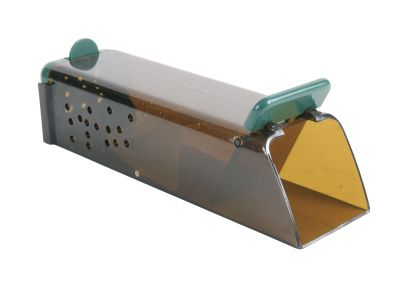
Welcome to the Mousetrap! Nay welcome to the perfect mousetrap!

The perfect mousetrap is one with four corners, a door and no exits. The mice are supposed to be baited with peanut butter and then disposed.


Now let’s look at the this healthcare trap. The four corners represent the four sentinels guarding the boundaries and the trap is laid for the physician-patient duo. The lure of this intriguing mechanism is its gilded bling as expressed by the designers. This, “they” say, is the perfect lodging for the practitioners of this noble of professions called medicine. Who are “they?” You might ask. And the answer will reveal itself shortly…
Healthcare costs are high in the US. But is it all about the doctors providing the care? Seriously comparing Sweden or Switzerland with the US one is really comparing apples and oranges. The personal responsibility is taken seriously in those countries. They exercise and have a limited diet, hence their life spans are better. Not because of the wonders of the healthcare dollar but by their own volition. Ah but the experts won’t tell you that. Besides there is very minimal if at all any discoveries, experimentation, innovation that is being generated from those countries, yet the drumbeat goes on to serve a purpose.


The first corner and wall is inhabited by the Federal Government with the likes of HHS, CMS (Medicare and Medicaid) and now the IRS. The initial buy-in in 1965 by the populace was that Medicare would provide care for the elderly at a reasonable affordable cost – a kind of a safety net. Those that could not pay would receive the Medicaid benefits free of costs. Well realizing that most doctors were not enchanted with the formula since the patient would spend the reimbursement checks and the doctors would be left holding the empty collection bag. The HHS/CMS came up with a solution for the doctor buy-in with “accepting assignment.”  The logic was that the physician would get paid directly for services rendered, albeit at a lower rate. This seems good on its face since collection issues would be rendered moot. And so it went until SGR formulas were created to limit reimbursements to the physicians and over a10-year period while the cost of living continued to rise as all federal employees and private sector employees garnered the appropriate increase in revenues, the doctors were mired in the perceptible risk of being raked over the coals with a 21%, then a 24% and now a 30% cut in reimbursement fear tactic. Each cut faced a deadline and the doctors held their collective breath each time. But each time the dark clouds passed since Congress realized the drama that would unfold for the Medicare beneficiaries as doctors would stop accepting Medicare. But now, get this, now the government through its agencies has decided to determine the right cookbook methodology of treatment for all high reimbursable ailments. It is now determined by experts like Ezke Emmanuel that 80% of the care can be rendered by Nurse Practitioners and Physician Assistants, so why educate more doctors. Plus, and this is a big plus, reimbursement for the NPs and Pas would be lower, hence the healthcare costs would be lower. But no one has ever looked at the real costs of healthcare and where the money is flowing. For every $1, 12% goes to physicians for services rendered and expenses. 36% to the hospitals, 35% to the pharmaceuticals and device managers, 17% goes to administrative purposes. Oh and if you missed this, you might want to know that CMS (Medicare and Medicaid) spends $385 billion annually on administrative expenses to its own employees.


The second corner belongs to the Private insurers and the Hospitals. I lump them in one as the lobbyists groups from both are strong and tend to change the Congressmen and women’s minds about how much they should be paid. While paying millions of dollars as benefits to its upper managers, the insurers and hospitals cry poverty in front of the lawmakers. ‘We cannot survive this without charging a higher premium or lower corporate taxation or both.” And there are many more excuses. The insurers delay, and deny payments to the physicians and at times to the hospitals making them jump through hoops that take time and effort away from actually helping patients. The hospitals in their theatrics, cry poverty and throw the risk of closing their doors and hurting the large community of hundreds of thousands if they don’t get the proper reimbursements through their active lobbyist the American Hospital Association.

 And every congressman or women knows that (s)he will never be reelected should this come to pass that the hospital will close its doors. No, not ever, Nyet! Meanwhile the cost of a single aspirin charged by the hospital to the private insurers goes to $50, which they collect from other write-offs in their ballooned 10Ks. 

And equally befuddling is the United Healthcare’s recent payout to a New York Podiatrist for $178,080.00 for surgical repair of two hammer toes that took less than an hour. Truly the left hand does not know what the right hand does! And to rub this wound into a mound of salt, the reimbursement for a open surgical cholecystectomy (gall bladder removal the doctor makes between $485-745 for the surgical procedure and the 90 day of care thereafter). Go figure that out!

The third corner and realm belongs to a new rising star in the private arena and it is the American Board of Medical Specialties and the American Board of Internal Medicine. These two entities have crafted a calculated strategy of requiring physicians to pass the Certification examinations in the specialty that the physician practices medicine. The physician buy-in initially was that they wanted to distinguish themselves as having achieved the “Board certification status.” If you were certified, you could keep that certification for ever. Recognize that phraseology? The revenues to ABMS and ABIM were modest and so they determined the revenue cycle had to be modulated to yield higher values. Enter the need for re-certification.  After 2000 everyone would receive a time-limited certificate of 10 years. Doctors entering the medical arena did not know any better so accepted the formula, while those grandfathered kept quiet. Now however, even time unlimited, (grandfathered) certificates will also need re-certification.  Ah, but that is not all, the revenues recovered from just the re-certification consequently doubled from this minor fiat, but the ABMS and ABIM were not done, they, then created the Maintenance of Certification or MOC as it is called, rule. Every two years a doctor would need to fulfill the criteria of MOC and only then they would be allowed to take the re-certification examination. Well then the 2010 revenues of ABMS rose to $49 million and the salaries of their President went to $750,000.00. Turns out that the president Christine Cassel MD (who had not practiced medicine or never was recertified) also happened to be on patient safety commissions and other boards influencing the needs of the certifications and the MOC processes (No one saw the conflict of interest, until maybe now and that scenario has yet to be played out). The conflict of interest was recently discovered and investigation is ongoing. But here is the kicker, MOC, no less the Board certification has NEVER been proven to show that a certificated physician is a better physician than non-certificated ones. (Disclaimer: I was certified in Internal Medicine and twice certified in Medical Oncology) I have never found that my expertise or knowledge was ANY BETTER than those who had not sat through this examination.” And what does ABMS have to say about the benefits, "MOC is recognized as an important quality marker by insurers, hospitals, quality and credentialing organizations as well as the federal government."  (Nothing about patient care or patient outcomes or patient well-being or differentiating quality of healthcare rendered by certificated and non-certificated physicians, however they imply the potential but are unable to provide a factual impartial relevant study.) So, what gives? Money, as in $$$ that one would quickly guess. And to formalize and ossify the need there is a continuous push by the ABMS and the ABIM to make MOC the necessary criterion for Maintenance of Licensure in each of the 50 States so the revenue cycle continues unabated and increases with each passing day. Oh and if I haven’t said this before, did you know that the pass rate of the certification examination just started to fall in the last two years. Why? You ask....Elementary my dear Watson they fail the physicians so that they have to come up with the $5000 again for the next year examination…Another productive solution to increase the ROI (Return on their Interests), Top line and Bottom line for these unaccountable entities. Wikipedia states: "Maintenance of Certification (MOC) is the process of allegedly keeping physician certification up-to-date through one of the 24 approved medical specialty boards of the American Board of Medical Specialties (ABMS) as well as some of the medical specialty boards of the American Osteopathic Association (AOA).[1] Some studies, funded and performed by highly conflicted employees of the member boards, have shown that board certified physicians deliver may higher quality care than their non-certified colleagues and that board certification is correlated with." :

The last corner of this mouse trap is the Litigation. 


The legal eagles spend $1500 per capita in PAC money to lobby the Congress so as not to allow any bills on Tort reform, cap damages for pain and suffering and definitely not consider those filing frivolous law suits should have to pay the court fees. No that would hurt the poor indigent people who have been wronged they preach. No, never, that will never pass, because the trial lawyers (And Shakespeare had them right on) do not wish to let this golden goose lay its eggs in another’s basket. Thus the tort reform sits and sits while Law firms hire and hire and get bloated with hundreds if not thousands of lawyers in each firm, while the solo practicing doctor finds it difficult to keep his or her practice open. By the way a Trial by Jury is unheard of in non-criminal cases in most if not all other countries except, you guessed it, the United States.

And that now brings us to the two little people in the middle, “The patient and the physician.” The one that ultimately suffers from all these concocted mechanisms of care delivery is the patient. He or she will ultimately pay for limited, substandard care while the doctor is made to become a secretary to check boxes for the governmental mandates and get the insurer’s pre-authorization checklists toiling away to build a large database for the enormous Big Data warehouse so that analytics will define what is and what is not medicine. The patient will pay more out of pocket because that is the next step to limit access to the doctor or the emergency room or the hospital and he or she will pay more in premiums to pay for those that do not or cannot pay for insurance coverage. Not only is the patient in danger of sub-optimal care as a consequence of this recipe-style medicine but he or she is also at risk of being marginalized for proper care if the costs outweigh the productive benefit as it is related to age and ability.


Lastly the doctor, he or she will have to live by the cookbook style of guidelines in medical care, thus going against the Hippocratic oath at times, especially if (s)he is a hospitalist and the job depends on a productivity contract. Admissions in the hospitals are being scrutinized and hospital stay days are the metrics for reimbursement by the CMS in most areas thus discharging patients in an untimely fashion to garner a larger margin from the admission might jeopardize the patient’s health to say the least. The constancy of cost as it relates to care might become the overriding concern of most hospital employed physicians who want to go-along to get-along and maintain their job security. Medicine will fail and that is exemplified in the National Health System (NHS) in the United Kingdom where there is nary a day when some hospital, a part of the NHS, isn't shown to be understaffed, dilapidated structurally, where employees show lack of concern with the conditions, patients and at least in one hospital where aborted fetuses were burnt to heat the hospital interior- their new HVAC system!

So there you have it, the perfect healthcare mousetrap that will catch a lot of sub-optimal, substandard, sub-par healthcare for the patients that fall into the trap.

Please think beyond today and beyond your paycheck. This format hurts everyone. It rips the nobility in medicine, destroys the faith between the healer and the patient. It renders moot humanity and glorifies the silicone chip and the almighty $dollar$.


                            Think!
                                 

Monday, March 24, 2014

The MAMMOGRAM Conundrum

To know is to know that you know nothing.That is the meaning of true knowledge - Socrates.

The recent Canadian study posed two questions for breast screening:


1.       Does mammography create over diagnoses?
2.       Does mammography as a screening tool help survival?

The answers gleaned from the study were “Yes” and “No.”

Now my two cents...

Let us look at some facts: The predicate of over diagnosis is based upon the argument that early diagnosis is an over diagnosis. In other words finding and treating a DCIS (Ductal carcinoma in situ) is an over diagnosis. Or so some will have you believe. They cite the SEER data and presume that some DCIS can regress back to normal states. Has anyone seen or documented a DCIS regression back to normal? The answer surprises us with a definitive No. Has anyone determined a DCIS by radiological means and then just followed the regression? The reverse answer however can be answered unequivocally that DCIS lesions have been noted to break through the basement membrane and run amok elsewhere in the body when left untreated over time. Studies in the past have estimated reduced mortality (0.3-3.2/1000 women). So if a woman’s life is saved that is a 100% save rate for that woman. Population data does not reflect the need of an individual. It only shows probabilities.

Another way to look at it is, knowing that 10% of all “abnormal” mammograms represent (true positive) cancer diagnosis and only 8-19% of the screened individuals have cancers detected as DCIS. That means over 80% of the cancers are invasive. Invasion indicates propensity to metastasize thus at least 8% of women will be diagnosed early and potentially saved.

Another remarkable non-statement in the study quotes a 5 year survival rate of 100% but fails to mention the 10 year survival rate for DCIS to be 98%. The 2 percent, loss due to breast cancer related mortality, seem not to fit the paradigm of limited disease in the paper.

So the question that we have to answer then is; does screening save lives? The NSABP-17 trial: Of the 818 women enrolled in the trial, 80% were diagnosed by mammography, and 70% of the patients' lesions were 1 cm or less. At the 12-year actuarial follow-up interval, the overall rate of in-breast tumor recurrence was reduced from 31.7% to 15.7% when radiation therapy was delivered (P< .005). Radiation therapy reduced the occurrence of invasive cancer from 16.8% to 7.7% (P = .001) and recurrent DCIS from 14.6% to 8.0% (P = .001). And the EORTC 10853 study: Similarly, of the 1,010 patients enrolled in the trial, mammography detected lesions in 71% of the women. At a median follow-up of 10.5 years, the overall rate of in-breast tumor recurrence was reduced from 26% to 15% (P < .001) with a similarly effective reduction of invasive (13% to 8%, P = .065) and noninvasive (14% to 7%, P = .001) recurrence rates

  The answer, if we are to follow the population based thinking comes from both cohort studies and randomized studies that show a decline in breast cancer related deaths since 1980s when mammography screening was mass utilized. After the initial significant decline post mass screening, the mortality rate from breast cancer has been steady. These trials were initiated between 1963 and 1982 the Health Insurance Plan study, the Malmo study, the Swedish Two county trial, the Edinburgh trial, the Stockholm trial, the Canadian National Breast Screening studies 1 & 2 and the Gothenburg Breast Screening Trial. All but the National Breast Cancer Screening found mammography to result in significant reductions in breast cancer mortality. . 


The NCI report and the SEER data show an incidence of DCIS has increased over time: 5.8/100,000 in 1975 vs. 32.5/100,000 in 2004 which is partly due to mammography yet remains meager to the 124.3/100,000 for invasive breast cancer. Most trials have shown reduced mortality from mammography. Does that mean we are over diagnosing? Or catching it early with a potential for cure? But even relenting a bit, the overall incidence of invasive breast cancer has declined since 1987 and especially since 2000 partly from the HRT knowledge and from catching the disease early. So, thinking this through further we find, a review commissioned by the AHRQ assessed the effectiveness of needle biopsy. The authors synthesized the evidence from 104 studies and concluded that 24% of tumors with DCIS identified from stereotactic guided automatic gun core needle biopsy were found to have found to have invasive breast cancer upon surgical excision (95% CI 0.18;0.32). Early diagnosis and removal therefore does have a decent payback.

What will happen another decade from now if the current professorial intuit plays out and makes women fearful of screening? Only time will tell.  The tragedy of more than 200,000 women being diagnosed with breast cancer and 40,000 dying from it annually in the United States is a reminder to all the well intentioned souls. 

The answers then might be answered as “No” and “Yes.”


References:
Diagnosis and Management of Ductal Carcinoma in Situ (DCIS)Evidence Reports/Technology Assessments, No. 185.Virnig BA, Shamliyan T, Tuttle TM, et al. Rockville (MD): Agency for Healthcare Research and Quality (US); 2009 Sep. http://www.ncbi.nlm.nih.gov/books/NBK32570/

Fisher ER, Dignam J, Tan-Chiu E, et al. Pathologic findings from the National Surgical Adjuvant Breast Project (NSABP) eight-year update of Protocol B-17: intraductal carcinoma. Cancer. 1999 Aug 1;86(3):429–38. 
.
Smith BD, Haffty BG, Buchholz TA, et al. Effectiveness of radiation therapy in older women with ductal carcinoma in situ. J Natl Cancer Inst. 2006 Sep 20;98(18):1302–10. 
.
Solin LJ, Fourquet A, Vicini FA, et al. Long-term outcome after breast-conservation treatment with radiation for mammographically detected ductal carcinoma in situ of the breast. Cancer. 2005 Mar 15;103(6):1137–46.

Nystrom L, Andersson I, Bjurstam N, et al. Long-term effects of mammography screening: updated overview of the Swedish randomised trials. Lancet. 2002 Mar 16;359(9310):909–19

Roberts MM, Alexander FE, Anderson TJ, et al. The Edinburgh randomised trial of screening for breast cancer: description of method. Br J Cancer. 1984 Jul;50(1):1–6.

Frisell J, Lidbrink E, Hellstrom L, et al. Followup after 11 years--update of mortality results in the Stockholm mammographic screening trial. Breast Cancer Res Treat. 1997 Sep;45(3):263–70.

Miller AB, To T, Baines CJ, et al. Canadian National Breast Screening Study-2: 13-year results of a randomized trial in women aged 50–59 years. J Natl Cancer Inst. 2000 Sep 20;92(18):1490–9.

Miller AB, To T, Baines CJ, et al. The Canadian National Breast Screening Study-1: breast cancer mortality after 11 to 16 years of follow-up. A randomized screening trial of mammography in women age 40 to 49 years. Ann Intern Med. 2002 Sep 3;137(5 Part 1):305–12.

Bjurstam N, Bjorneld L, Warwick J, et al. The Gothenburg Breast Screening Trial. Cancer. 2003 May 15;97(10):2387–96.


Shapiro S. Periodic screening for breast cancer: the HIP Randomized Controlled Trial. Health Insurance Plan J Natl Cancer Inst Monogr. 1997:27–30.

Friday, March 21, 2014

MOUNTAIN SPORTS AND HEALTH


I admit that I love skiing! But then so do the hundreds of thousands others. And they are probably more avid then I and probably better at it too.


Mountain sports have an inherent fact that most of us ignore as we expectantly run to the ticket windows. Ah for that cold icy fresh air first stoking the warm fire of desire. The chairlift awaits and the gondola beckons but there is something amiss, just ever so slightly that you cannot put your finger to it.


So let me count the ways that, that amiss has some physiological ramifications to it.

I first became aware when my daughter would wake up at a resort in the Colorado Rockies and start heaving up her last night’s dinner. No fun there. I was annoyed (imagine) that she was really not interested in skiing but wanted to veg out in the room. Then it became certain even to the most resistant one (me) that every vacation a similar episode developed. What was happening? Just about then, the resort started offering a canister full of oxygen for purchase. I bought several of them and gave them to everyone in our family. Guess what happened? No more heaving! No more complaints! She was the first one out with her skis and poles.

Okay so what happened? It appears that when a sea-level dude or "dudette" comes over to a 8000 foot elevation without acclimatization the hypoxemia (low oxygen levels) in some generates a gastric regurgitation (upchuck). Additionally I was noting myself a tiny residue of headache and always filtered that through the lens of a difficult work period prior to a vacation (taking care of all the sick ones that required attention immediately for the time period I would be away). But those two to three whiffs from the canister cured that too. No more headaches. Voila, amazing two problems solved with one swing of the bat.


Then I started thinking about other possibilities that might also be at play:

A friend of mine with a labile hypertension controlled with low dose anti-hypertensive medicine ended up in the emergency room after being airlifted due to a hypertensive crisis. His blood pressure was sky high and fear of strokes was a significant consideration. Thankfully it was resolved with additional medication. The next year, he told me that he carried extra blood pressure medicine when he went to more than the mile high resort and lo and behold a similar occurrence was at hand but one he was prepared for (he is a physician). The logic from this suggests that hypoxemia (low oxygen levels) seem to drive the vaso-constrictive mechanisms of the arteriolar system, with an associated rise in the heart rate and respiratory rate as a compensatory mechanism. (You will notice shortness of breath when you walk the mile in your ski boots carrying your skis and poles at that high altitude).

Another visual at the airport one time while returning from our vacation, I observed a young woman in the wheel chair being pushed to the gate for departure. I found out that she had been hospitalized with a blood clot and was returning home from a miserable “vacation.” That was sad in itself, but what of this blood clot? I wondered.


It turns out that similar to the risks of developing a blood clot in the long flight a similar mechanism migh be at play in a mountainous resort for sea level dwellers. The high altitude with its marginalized oxygen levels associated with dry air that saps the moisture from within the body at rest (and more with exercise) and the vaso-constrictive phenomenon, I mentioned earlier can be a doozy for a blood clot in the leg. Add to that potential a mutation of the Factor V Leiden mutation present in 5% of the population and or the less common Prothrombin mutation that are promoters of blood clots the results can be terrifying and hurtful. (I am not going to mention all other risk factors such as age>65, existence of cancer, birth control pills, obesity etc. Suffice it is to say there are many other issues that can predispose a person to developing blood clots)


When all the factors are present, what makes the clot itself? Imagine a blood flow through a smooth blood vessel. The flow is linear. The “stuff” red and white cells and platelets all stay in the middle of the stream while the “liquid” as in plasma surrounds the core. A disruption due to a crossed leg, a injury can impair the linear flow and the platelets “fall-off” to the sides and with the other ingredients mentioned as in dehydration (thickens the blood and slows the flow) hypoxemia (causing compensatory vaso-constriction) and the last hammer (Factor V Leiden mutation) makes factors in the blood including platelets “stickier,” you now have the set up for the disrupted blood flow and piling on of the clotting factors around the nidus of the platelets and ouch, the leg hurts. The higher risk is that one of those clots can run the venous blood stream and end up in the lung with compromised breathing and endanger life. To prevent is simple, Drink plenty of water, invest in a canister of oxygen and use it and take a baby aspirin (81 mg) provided your doctor (not some “provider” but the real critical analytic decision maker) agrees to the use of this medication based on your history.

Oh and I might not have mentioned that skiing is a dangerous sport because there are inherent risks of falls and crashes that can cause broken bones, separated shoulders, ACL (Anterior Cruciate Ligament in the knee joint) tears and other sundry eventualities that twitter friends like @hjulks in the Orthopedic field know all too well and how to manage and fix.

Mitigating risks is easy once you know the hazards.


Skiing/snowboarding without a helmet does not prevent accidents but may save you from a brain injury. Now that you have chosen your "bling" on what to wear and show off, don't forget the "thing" that protects your noggin. Skiing and snowboarding under control can also save you from visiting the orthopedic department, the hematology department and the neurosurgery department.

Enjoy your vacation!
Know the risks!
Prepare in advance!
Have a ball!

Sunday, March 16, 2014

ASSUMPTIONS

The gathering storm seems to instill a foreboding in all things living. The dark skies, the billowing clouds, and the quiet of the birds and the first raindrop spell danger. Something this way comes, something, which strikes dissonance into the harmony of human existence.

The storm comes, lashes its collective wrath and moves on and those that survive gather their collective wit and start to live again. It is the existential human drama. Life recouples, survives and redoubles her efforts to keep living.


But there is a new kind of storm that pricks the edges of our understanding. This one carries a darker more sinister purpose. This one is blacker than black. It is not a storm of nature’s doing. It is man-made, conjured up in that 3-pound universe that drives humanity. This storm is called ASSUMPTION.

Assumptions exist in most all things scientific. Theoreticians who conjure up new probabilities and create models that describe the human condition and its existence; live on the ragged cliffs of thought. Let us take the existence of Black Holes, which was the mathematic model created by Stephen Hawking. It was the creation of a fecund mind subsequently visualized in reality.

We see assumptions drive every aspect of society nowadays. Once what was considered the purview of theoreticians is now the domain of the “journalists” and self-proclaimed “experts.”


A short course in today’s expertise is evident in the controversies that surround the scientific world. A review of the scientific literature reveals that 50% of the studies cannot be duplicated. Leave alone the concept of verification and validation of any experiment as the hallmark of rigor, here the initial premise is so false that duplication is well-nigh impossible. The falsity is based on the notion of the many biases that form the prejudice behind the “study.” Biases run the underworld of the false prophets of profit. Biases induce assumptions to satisfy the end result that one is predisposed to at the outset.

Let me explain: If you want to prove that Product X leads to Effect Y then all one has to do is manipulate the question of how to evaluate Effect Y. Or select individuals that are more likely to answer in the affirmative. Or build on the expectation of the Product X using the “Placebo-effect” as the surrogate to arrive at the conclusion. Then use the “intent” to remove those individuals that do not conform to the paradigm of the cause and effect to distill down the argument to obtain the relevant p-value. And voila you have a study that becomes “EVIDENCE” for the rest of. There they go harping the benefits of “Evidence Based…!”


Two recent cases come to mind: The mammogram Canadian study and its fall out in medicine. The “experts” continue to “wing” their way into one or the other camp. Both sides are passionate in their thought but both are prejudiced under the weight of their bias. The other subject of recent hifalutin assumptions is the disappearance of Malaysian Flight #370. The missing aircraft, crew and passengers continue to fuel assumptions. Everyone stokes the flame a bit. “Experts” abound but not one has any idea of what happened. Might it not be prudent to just keep one’s opinion to oneself until facts reveal the truth? But, that does not keep the 24-hour BS cycle of non-news News and the wealthy journalists employed with their million dollar salaries happy. The News must be created. The minds must be cajoled to a certain viewpoint. The paradigm must be polished every day. When one considers that 1 out 4 Americans surveyed do not know that the earth revolves around the sun, what hope is there for that 25% to realize the difference between truth and fiction and for that matter have any scintilla of self-emboldening critical thinking?


I shudder to think.


“I must be cruel only to be kind; Thus bad begins, and worse remains behind.” - Shakespeare

Friday, February 28, 2014

GPS: Curses and some Remedies


The other day, I was driving to a newer destination and somewhere in my journey, the GPS navigation display gave up the ghost, all it would say was…”Searching for satellites.” I looked to see if I was under a canopy of trees, near a mountain, or in a tunnel. None of those criteria were satisfied. I was on a n open road.

Now what?

Fortunately before getting in my car, I had Googled directions to the destination and committed to memory as a redundancy. After a few missed turns and “Recalculating” in my brain, I was able to reach my destination, albeit a little late.

Imagine yourself in the cockpit of an aircraft and the GPS refuses to give up the digital cures. What would you do? The straight and narrow of course is tune the VORs at all times and triangulate your position. Simple enough! But for that you have to have sectional charts or low altitude airways charts, Right? Absolutely! RAIM loss is uncommon but it occurs. Maintenance of satellite feeds are also uncommon but they happen. So the smart flier keeps his brain engaged, his fingers moving the dials and correlates his findings with those of the GPS. The Multifunction Display (MFD) is great but a secondary source of data is always a welcome security blanket. If you are bicoastal flier, turning East or West will take you to the ocean for bearings, easy enough. But in the middle of Nebraska where one stretched out field looks like any other, reliance on other devices, including the compass is a good idea for correlational accuracy and staying engaged. Look outside the window. See the terrain. Do some pilotage periodically. Keep yourself in the know!


Another episode of this navigational saga unfolded the day after, while the GPS navigation was in full functional mode, I missed a turn that it reminded me in its pesky snarly voice, “Turn Right!” I was listening to music at the time. So I took the next turn and now the bossy voice from the GPS said, “Recalculating!” after a brief period it outlined a pathway in solid blue to follow. I did and found that it was circuitous. After 5 minutes it had landed me back to the spot where I had made the turn. What gives? I thought. Well apparently the computer database had not been updated to see the new road connecting my designed path and where I was at the time. The old mind then “recalculated” asked a passerby and taking a few “rights”  and “lefts” I was on my way again.


Now wear the aviation hat of a pilot. What would you do? Suppose errant information inserted into the FMS takes you through a path with higher terrain and you are trying to stay under Visual Flight Rules (VFR) below a cloud deck. Now combine that little fiasco with dimming twilight and haze of fog and now Ground Proximity Warning system. You can see where I am going with this. Remember American Airlines Flight 965 (Boeing 757) that crashed near Buga, Columbia. It was determined by the Special Administrative Unit of Civil Aeronautics as a navigation related accident. Yes, that was a tragedy of great proportions.

http://www.youtube.com/watch?v=O3-szBihvqk


Included is a Cockpit Voice Recorder (CVR) data from inside the cockpit:
2140:56 Captain: Why don't you just go direct to Rozo then, alright?
2140:58 First Officer: OK, let's...
2140:59 Captain: I'm goin' to put that over you.
2141:00 First Officer: ...Get some altimeters, we're out of uh, ten now.
2141:01 Captain: Alright.
2141:02 Cali Approach: Niner six five, altitude?
2141:05 Captain (radio): Nine six five, nine thousand feet.
Right bank of 20 degrees begins to decrease. Flight Level Change disengaged, Vertical Speed and IAS modes engaged, altitude passes 8,600 feet.
2141:10 Cali Approach: Roger, distance now?
2141:15 Cockpit Area Microphone: Terrain, terrain, whoop, whoop...
Pitch attitude 4.5 degrees nose-up, roll attitude is 12 degrees right, airspeed down to 234 knots, rate of descent 1,500 feet per minute, altimeter at 8,480' MSL, radar altimeter at 1,476' AGL. Autopilot disengages. Master Warning activated. Engine EPRs at 1.0.
2141:17 Captain: Oh [expletive]..
2141:17 Cockpit Area Microphone: [Sound of autopilot disconnect warning starts]
2141:18 Captain: ...Pull up baby.
2141:19 Cockpit Area Microphone: [Sound of aircraft stick shaker]
Pitch attitude increases to 31 degrees. Aircraft rolls out of right turn and reaches 13 degrees left bank. Master Caution issued as radar altitude decreased below 500' AGL. EPRs increase to 1.35 as radar altimeter decreases to 109' AGL and airspeed decreases to 187 knots. Landing gear and flaps remain up.
2141:20 First Officer: It's OK.
2141:21 Cockpit Area Microphone: Pull up.
2141:21 Captain: OK, easy does it, easy does it.
2141:22 Cockpit Area Microphone: [Sound of autopilot disconnect warning. Sound of aircraft stick shaker stops]
2141:23 First Officer: Nope.
2141:24 Captain: Up baby...
2141:25 Cockpit Area Microphone: [Sound of aircraft stick shaker starts and continues to impact]
2141:25 Captain: ...More more.
2141:26 First Officer: OK.
2141:26 Captain: Up, up, up.
2141:27 Cockpit Area Microphone: Whoop, whoop, pull up.
End of CVR recording.
So to all who live and die by the flash of technology either as a pilot or driving GPS navigation display installed automobile, a word of advice… Remain engaged

Wednesday, February 12, 2014

"A BET OF SORTS..." (CVS, Obesity, Aviation and Transposons)


What drives human behavior is an argument that has long populated the minds of men and women. Indeed what does?


Is it…?

Ah but then I will give it away too soon.

So let’s look at the social milieu, the push and pull of things and slow emergence of society. Society is dynamic and the equilibria are based on a simple Nash equation. Nothing happens in a social vacuum. Nothing, except a freaked out mind!

We all take risks, don’t we? Of course we do. Getting out of bed to confront a new day is a sort of a potential risk. What dreams might materialize into reality, is the confounding question that haunts the present over the past. You see, there is a certain bet we all make on a daily basis. To each his own bet, though, because living life is an individual enterprise and such thoughts and actions are rarely shared.
Today we learn that obesity is the realm of chronic diseases such as diabetes, heart disease and cancer. All these ailments have a scientific basis to them. The root cause is anchored in inflammation. So why is the populace still indulgent in the cheese-steaks, the donuts, and other excesses? Well there is also perhaps another reason lurking behind the behavior, and we will get to that too in a little…

And while on this unstructured communication let us look at smoking and drinking. Both such societal norms are curses of enormous vehemence against the human health and overall survival. Yet we maintain our path in spite of warnings on billboards, on the back of buses travelling at high speeds and heart rending ads on the television.

So what gives…?

Humans! (Read: Against the Gods: The Remarkable Story of Risk ~ Peter Bernstein)


We are an unstructured evolving beings, gathering, collating, enriching, codes of all assumptions and collection of all experiential referents, which are turned into rhythms that flow into societal behaviors. And we make bets on ourselves, all the while looking and peeking at others. A smoker gathers in the company of other smokers and re-calibrates his or her thinking that there is no harm and what little there is, is ratified in their minds as okay.  He or she finds rationales in archived pseudo-scientific literature to pull data for his or her own mental defense. A type II obese diabetic may find the endorphin release from a sugar rush of a comfort food too difficult to give up. An alcoholic the same! We find solace in the company of other like-minded. That is our inherent religion.


What it is, is the ongoing silent communication within the carefully bounded rationales of the mind!

The other day CVS  decided to take a short term loss for a long term gain benefits to humanity to stop selling cigarettes. It would seem like a good marketing gesture by the company. And all the pundits and experts bowed and prayed to the neon gods they made” that the company found a new religion, with adoration on all fours. But does that really modify the behavior of an individual? I think not. Only education works and a constant flow of real information that people can assimilate and from where they can grow their understanding. So while on its face it might appear a cause celebre. It rarely is.

A similar gesture of “good will” seems to have slid down the Aviation  docket the other day as a “product enhancement” about having pilots with BMI of 40 to undergo a sleep apnea evaluation. This was steeped in no particular study, NTSB finding or for that matter in anything remotely scientific. But there it was. The long arm of the pseudo-science and polity it appears was trying to appease their managerial gods and appear benevolent. It will now as it should require public opinion and a sprinkle of scientific facts before such enactments are deemed mandates. Should obese pilots be grounded? Better yet should obese pilots  undertake some measure of self critique to gain better health? These simple questions simultaneously infringe upon and exploit human endeavor. Mandates are fraught with group-think impositions at best. Appearing to protect by laying down a padded cell is a fragile state that collapses in a heap. It is as Nassim Taleb points out in his book Anti-fragile that human endurance, their survival and "Things that gain from Disorder" are embedded in exposure to and benefiting from risks. The exposure, both experiential and knowledge from others makes us strong! And the longer we mask and hide from the little whips and scorns of life, the more the potential for a calamity - the huge fat tail of a thing! The Transposons (or jumping genes) jump to strengthen the DNA for its survival against the ravages of other microbial life forms. So why this timid stance to create a padded protective cell?

Common sense is rare in today’s circle of intellectuals, especially the “experts” who surround themselves with the same self-fulfilling prophecies of “I am right and you are wrong!”

So in answer to what drives human behavior, question, and the answer you might have guessed by now…it is the Bet of Sorts we all make, against the Odds.

As humans we are all risk takers. It is grafted in our DNA. That is why we landed on the moon and sent the Rover to scope out planet mars. It is why we build things and keep modifying them as we learn our mistakes to make them right. It is why we travel to far away places to learn what was and is over there. It is why we are humans! But Common sense is not that common, because it needs to be cultured. And anyway if you really come down to it...if the middle-man was not paying for the healthcare bills, medical care would be cheap and none of this hue and cry would occupy the media-scape. Now would it? Just a thought.

As Mr. Spock would say:

“Live Long and Prosper!” –and gain Liberty through Knowledge and Understanding.

Friday, February 7, 2014

UNDERSTANDING


Realizing the domain of hazards, transgressions into any venture are replete with the unknowns. There lie the risks of “what could be,” rather than “what should be.” The imperatives of knowing the risks do not minimize the potential of something that is not understood or a hazard that is not known to exist.

Humans live in the wild frontier of the Lewis and Clark expeditions. A snake here, a wild boar there and life ends. Health expectations seem to follow such traditions of the unknown. Even though most pathology is well known, the constant exposure to newness and its interaction with the physiology create the “wild boars.”

Risks

Mitigating risks is the overall desire of all physicians when they undertake the cause of healing. No, it cannot simply be “do this and that will happen.” One has to think the minutia of so many iterant that the multiprocessing brain through experience is most times able to eek out the right answer. And here lies the bleeding reason where not all decisions given the human capacity, are correct. The risks are both from the disease, that compels towards injury and directed medical therapy that has an embedded intolerance to the functions of the individual cell. The balance that permeates between the two is what is considered “success.”


While considering all the nuances of most known risk factors that might rear their ugly heads, a physician then also has to consider the capacity of the patient to relate to the risk of the proposed therapy. For instance, is the treatment more harmful than the disease it is purported to eliminate? Is the individual able to withstand the side effects of the therapy or is he or she in a weakened state of being and that even though the therapy is the correct one with the most benefit, yet the weakened state of the individual, would of necessity certainly endanger the patient. One might also then consider weather the short term benefits of the therapy create the long-term collateral side effects and that whether such a therapy may well not be employed and a lesser or no therapy (placebo) be employed? These are questions of great concern both to the patient and to the physician. As the science of medicine has shown us that the overall benefit has to consider the underlying risk and the capacity of the patient to withstand such therapy. Additionally such proposed therapy should be considered only when short-term benefits do not outweigh the long-term injury to the patient.

Capacity

The physiology and neuro-psychology of an individual at play in this interaction of “to do or not to do,” is of immense importance. An individual’s vanishing immunity within from the pain of the affliction has to be considered in the reasoned efforts by the physician. At times the wisps of such relational issues bear significance, in that minimizing therapy of the patient may have more long-term benefits then otherwise. A weak immune system is ripe for coercion from many potentially devastating ailments, including cancer.

"...to suffer the slings and arrows of outrageous fortune..."

and

"... whips and scorns of time..."

An appropriate example here would be the short-term benefit of corticosteroids and the implications of secondary infections, osteoporosis and suppression of the adrenal gland function. From a orthopedic point of view, one might also review the overuse of steroids within joint cavities and the untoward effects on the ligament weakness and potential rupture.

The weight of this argument is conceived in the thought that before any therapy is embarked upon, a measure must be established between risk, capacity and the true potential benefit to the patient.

Tolerance

At all times in today’s world of “patient-centric decision-making” the patient is a willing and able decision-maker along with his or her physician. It must be so for the proper and ethical undertaking of the care of the patient. However, here we arrive at the slippery slope of the improper effect of this causal behavior. For instance the right therapy may be rejected by the patient through improper understanding or as a result of the short-term side effects from such therapy. A patients self image and ability to withstand the toxic effects to gain the benefits may be conjured in a most negative light and the potential curative intent may be lost. Is the patient then like the consumer (in business world) always right, no matter what the decision? Thus the implied risk of intolerance to proposed therapy then, accidentally becomes the cause of deviating from a path more profitable to the patient? These questions bear a deeper level of understanding. One cannot simply “cut and paste” with the “one size fits all” mode of reasoning.


Acute illnesses

All diseases fall into the categories of “acute” and “chronic.” The former expressly involves a larger share of suddenness of a deviation from a normal existence. The relative change is both sudden and quite disruptive. It carries with it the burden of a lowered threshold of signs and symptoms, where each symptom is perceived excessive and “life-altering.” The intent of the patient is obvious as is that of the physician; to control and mitigate all such complicating insults. The need is great and the desire even greater. Again, even here a balanced reasoning is needed by both parties to reach appropriate results. A patient with a sudden cough, fever and asthenia yearns in today’s world to get their hands on an antibiotic, anticipating an end to their malaise and other symptoms. The physician in an attempt to please may offer such a band-aid, knowing at all times that such therapy will have little or no benefit, yet with that lurking distrust of the unknown is compelled to acquiesce. Here lie the seeds of discontent to so many future ailments. Excessive antibiotic use, especially of the “next-generation” variety, can and usually does make for selective genetic pressures on the offending viral/bacterial/fungal agents. Thus therapy is laying the foundation of a future debacle for human race needing better and better manipulation of the chemical codes to thwart such mutations in these offending infectious agents.


The likes of MRSA, VRE, mutant TB, E-Coli and the like are a testament to such profligate misuse.

Chronic Illnesses

When chronicity compounds the problem, the patient may over time learn to create various means to accept such changes. For instance a low-grade discomfort in the foot may lead to a imbalance at the spine level and create a discopathy creating symptoms of sciatica and more discomfort. Or a chronic inflammation of the stomach treated with “Tums” may be a harbinger of a Helicobacter Pylori infection that precedes a gastric (stomach) lymphoma or a gastric cancer. Long-term acceptance of a low-grade chronic condition can and will at times lead to a worse outcome. Such patients need to be counseled in appropriateness of care and management. All minor complaints, even trivial ones can lead to a profound discovery that can thwart the risk of greater harm down the road of life.

Understanding

Lastly we arrive at the core of proper care; Understanding!

No truer knowledge than a reasoned understanding of the ailment both by the patient and the physician will lead to the best outcomes.

A knowledgeable patient asks the right questions and a knowledgeable physicians offers the correct answers to those questions.

We live in a world of fear and reprisal. We must learn the art of managing these fears and by acknowledging their presence, learn to educate against reprisals. The world is a conjugate of many reflections. A proper understanding circumnavigates such a minefield. It is in the learning of the known that measures of ultimate benefit reside, not in the mindless guidelines and mandates that conform to a closed-loop thinking of the few.


Hey, I didn’t say this was going to be easy!