Wednesday, September 29, 2010

Teachers and Students in Medicine

                                              Knowledge (statue in Turkey)

All hail to the teacher. And yet what has become of the student? The ignominy that resides in hubris leaches out slowly and steadily into our reality. We the teachers now expressively ensconced on the upper rung of the ladder given grief from the publish-or-perish-world conspire to manipulate data to suit the world’s thirst for knowledge. We the teachers face the glut of questions answered with the thin veneer of specialized words that mean nothing and impart nothing. We the teachers hatched into a world belaboring to achieve fame and recognition lose sight of the young student that puts out his or her hand and asks, “May I have a little more sir!” This little person with a brain that is a sponge for knowledge is left threadbare with patches of knowledge, a confusion of ideas and a dose of cynicism that will fit the mosaic of a future reality.

What is it that inspires a teacher must undoubtedly inspire the student. And yet if the inspiration is drawn purely from a function of self-advancement, then all hope for the fundamental grant of imparted knowledge becomes riddled into the fabric of misappropriated facts. It is from this misunderstood and fragmented knowledge base that the mind of the student must grow and encompass and learn to practice in the minefield of human-diseased indignity. How can they, in all likelihood, ever accomplish such lofty goals?


I remember those days when I was a student. They were heady days long in the hour and short on time. There was a constant barrage of questions and answers, some answers were short but paved the way to search for more details while others were to the point needing little exposition. The battle of wits continued between the student and a bevy of very smart, considerate, careful and thoughtful teachers. These were the old guards. Their purpose was to educate and create the models from which new knowledge would sprout. They felt pride in calling someone their student. Their pride flowed in the words “my student.”  We were their calling card.


But most of that is gone now. Today the race to produce circumvents all such glory. The race is all. There is nothing but that race. The teacher walks into the lecture hall rushed for time, gives out a test and sits down at the desk to contemplate his own issues. Remarkably, the students have come to know that never is any time to ask questions. Just listen keep quiet and maybe skip classes and then cram by rote from the textbooks before an exam and graduate with a degree. Some students yearning for better grades espouse the cause of the teacher and become embroiled in the “scientific trials,” only to become what the teacher is.


And there in lies the problem, a perpetuity of this distress. What insights might the student have gathered from the textbook about the clinical nature of his understanding about medicine? He might as well have seen the TV show House, MD and come to a conclusion that irreverence to others including patients and their families is the hallmark of being a physician as long as you can call for every diagnostic test and probe and biopsy any and all organs of the body to determine the malady which, I might add may be determined in large measure with a simple art of history taking and thorough examination. Yet, House MD an actor with no knowledge of medicine and far less as a sympathetic human being, watched by millions as a recalcitrant intellectual, is idolized as a hero. My, My what have we come to? And no you don’t have to become a Sherlock Holmes and trespass into someone’s home to determine there is mold to realize that a fungal pneumonia is a possibility in an immuno-compromised host. It all stems from a dysfunctional nature of thinking. The very essence that makes us humans has been slowly and quietly through mechanisms of studying the study habits and measuring the measure of accomplishments or deifying a phenomenon of teaching that lasts a season of endearment, we have lost and tripped onto this societal debacle.


When did it all go so different that now we need to analyze “how to teach?” and “how to learn” There are countless articles and books and magazine reviews about the art of learning. There are empty words that skim the surface of intelligence amongst the discussants who sit with their noses turned up high and their brows touching their hairline or if not, wrinkling the elegant bald scalp that gives them the air of arrogance, but through all this chicanery, does nothing for the students. Words like “Metacognizant” and “Concept Map” and “Mind Map,”  resound in the circles of these ivory tower individuals that have become so bloated from self that their ballooned faces have turned their eyes into slits from whence they cannot see.


The function of teaching is to educate the student with the known knowledge. This knowledge is not abstract. The basic building blocks are the firmament of Anatomy and Physiology. From there the Pathos that inhabits the human body can be understood. From the knowledge of Embryology a branch of Anatomy becomes the building block of childhood disorders dealing with malformations such as the 


Tetrology of Fallot and Dextrocardia. Equally, knowing the basic understanding of the Kreb’s cycle can help in the understanding of hypoxemia and its effect on various organs and from there to the acid-base disorders that do ensue. It is not the temporary, the latest, the trendy knowledge wrapped in a euphemistic term called "evidence." It is the deep unchanging rule of nature. It is fact.


Similarly understanding the cell growth cycle and the proliferation of the cells into daughter cells hastens the knowledge of how malignancy starts and spreads and how medicines like chemotherapy counteract this wayward behavior. From there the students can garner knowledge of the cell surface receptors that line every cell surface and respond to the various antibodies, hormones or specific chemicals and through knowing this reward themselves with the understanding of the intra and intercellular pathways that motivate the cell to grow, divide and multiply.

The building blocks to “know” medicine are essential to the gaining of a foothold into the reality of disease. Knowing and citing literature about esoteric and unusual medical cases may seem smart and lofty but it isn’t. It is true that the knowledge and understanding of diseases keeps changing like the shifting sands of time, yet the basic mechanisms of health remain constant. Build a strong foundation and the structure shall survive a large measure of time. The gifted Sir William Osler, MD was one such teacher that touched the pinnacle of educating students.

               Sir William Osler, MD

Physiology teaches us the mechanisms of normal activity of each organ and the combined pool of organs within a system. Since most organs are interconnected with vasculature and neural supply they, the organs talk to each other via chemical and neural circuitry. An assault on one is an assault on the entire soma. Learning about heart failure is not about learning the thousands of medicines that keeps the contractility of the heart muscle, nor is it about the extra fluid buildup that needs to be purged. What it is, is the knowledge of heart muscle’s decline from impeded vascular supply or overworked fatigue or age and the congested channels that flow into it, the organs that get flooded with extra blood and become dysfunctional with the excess fluid within their tissues. 


The liver so congested cannot process the food hence the patient loses his or her appetite. 

A continuous congested liver leads to bile-flow stoppage which shows up as jaundice and equally in that chain of events, the inability of the congested kidneys from filtering the excess blood from its waste-products leads to acid-base disturbance from the electrolytes, leading to acidosis. This excess acidity creates a damning effect on the blood factors contained within this humor, which can ultimately lead to a disseminated intravascular coagulation that can cause spontaneous bleeding from any site and can be fatal. It is from here to there to everywhere! 

So the vehicle that transports the “waste” is equally important as the heart that pumps the blood, which is  as important as the liver that filters the food products and makes the blood factors that keep the blood in a congealable state. In essence the cumulative damage from a single organ mishap leads to a multi-organ dysfunction. It is in this measure of understanding that the furtherance of knowledge is achieved. The connectedness of it all!

                         The Doctor by Luke Fields

Once the basic building blocks are firmly entrenched the nuances of each block can then be enhanced with additional information. Knowing the information without the basics is impressive when mouthed but in reality does little for the patient’s health or the physician’s advance in understanding.


So students of medicine, that we all are as physicians, must renew our association with the building blocks now and again to keep ourselves in the loop of understanding.

And teachers of medicine remember the time you are spending with the students is more important then the hours spent citing literature to your cohorts. If you are after fame, remember that the student will echo your name throughout his life. The Galley proof that is held in your hand that makes you expand your chest will soon be placed in a heap; forgotten. It is better to be a giant upon whose shoulders the student learns to stand on and see where others fail to, then an empty suit that hollers and demands silence but gives little in return for that demand. If you are after educating then you are the teacher the student will walk with in lockstep.

Can teaching be mandated and in the same vein can learning be forced? The answer is obvious to all. No and no. Where a student desires to learn and a teacher is passionate to teach the combination can have far reaching benefits for the student and the society in general. It is the passion that emanates from the deliverer of the message and the desire that resides in the receiver, which makes for a great future. It is a powerful reach into the expansion of understanding that is devoutly to be wished. 

Sunday, September 5, 2010

Being a Physician


She had recently celebrated her Emergency Board Certification. After completing her 12-hour shift, which had consumed two extra hours of paperwork and transferring of patient data to her peer, she had finally left the hospital at 1 AM. It was a clear still night; the stars were out in their full majesty. Somewhere in that 25 miles of car ride between work and home, her eyelids grew heavy with fatigue. And then there was a veteran rheumatologist moderately obese from the love of Cheeseburgers who had just completed his “patient-rounds” in the hospital and had made his way back to the parking lot. He felt tired that evening, so instead of starting his car and rushing back home, he wanted to just sit in silence in his car for a moment, to luxuriate in the oft desired but mostly elusive of life’s benefits; respite, unfortunately for him that moment never ended.

Those arduous moments of loss have a pungent vulnerability to them. They sting your senses and dissolve the cloak of aloofness. They come too close for comfort. The sun was still beneath the horizon although the faint echoes of the reddish hues were just beginning to stream the sky. I walked lockstep with my surgeon friend. It was a chilly morning, cloudy with doubt and question of rain and the fine misty breath of my friend dissipated quickly as he spoke of his late night encounter with a ruptured aneurysm. He rubbed his hands while we walked in through the automatic doors together and said, “You know, I think I will go to the ER, I don’t really feel that well.”  Twenty-four hours later after a three vessel bypass he was recumbent in the intensive care unit watching the flickering nonsense on television.


It is a strange life we have, I thought. Strangely attractive for the lofty goals to help human survival and banish misery, and strangely repulsive for the loss of self and banishment from living. So the following day when work had depleted all sense of personal thought and subjugated the sense of loneliness, I made my way to the hospital to care for my patients. It was a cold and chilly day once again but a beautiful clear blue sky as a rejoinder to the recent past. Things were looking up? I thought.

“I walked five steps today.” He said, with a tremulous voice bordering on great joy. He was an elderly man laid up for all the wrong reasons. Medicine was a labyrinth of chutes and ladders for him. He would make the arduous climb to slowly feeling better and then something would eject him down the chute. It gave him comfort to have this modern day vision of healing around him while he lay in the hospital bed. This was not a path he chose and neither was this the environment he preferred; yet there he was concealed behind the dubious smile of doubt and concern. Lets call him Joe.


“So Doc?” Joe asked with that quintessential cliffhanging question that lingers on the edge of the tongue barely able to roll of it. I knew where he was going with this daily dose of salutation. “Well Joe it will be a few more days.”

“I was afraid of that.” He said, his smile vanishing behind the obvious layer of despondency. I had barely turned to withdraw myself from the room when he asked, “Will I ever be back to myself again?”

I held that question for reasoning a bit longer than I normally would. “Depends Joe, what you mean by that. Are you referring to your thirties, forties, fifties, sixties or your current seventies?”

“Forties would be good but I know you are no magician.” He said, again the smile back on his face.

“Back to where you were functional and all before you came in. That is very possible provided you keep that smile and follow along with my advice.” I don’t know what made me say that to a dying person, but there it was all laid out. The sound waves had crashed against both our eardrums and the promissory handshake and a mental agreement between two parties was hammered out. Although the very premise of such a promise was out of frame with reality I had uttered it and we had both committed it to memory. Even though life and death are extreme colors within the same spectrum, he, unfortunately had by circumstance and age, been granted a passage to the “undiscovered country from whose borne no traveler returns.” But there it was a promise spoken, assimilated, accepted and expected.


Time dilation did take pace as I searched and broke some spines of books and journals that had never been opened in the hospital library. Day after tedious day, the ordeal of finding the right peg to fit the circular hole became a trying ordeal and an emotional drain. Somewhere in there the consequence of reality disturbed the manufactured realm of fantasy. I continued to cheerlead. He needed my best and I was not going to disappoint him. I felt he could see through my limits and yet he played along. Then on the sixth day of searching, I discovered this obscure letter to the editor in a medical journal describing a similar patient in a nearly identical situation. I discussed that with Joe and his family, the ramification of such a trial of medication. He agreed whole-heartedly saying, “I trust you doc.”


A sense of trust weighs heavy on the conscience. It has a way of redefining how you see the world. It provokes thoughts of success and failure. It energizes the spirits and with one turn of the screw pulls the plug. It fills you with promise as equally as it depletes the soul with worry of inability. It is the very essence of humanity based on kinship and yet it has a heavy ball and chain attached. It is the root of the bifurcated self and non-self.


The next morning after that “Hail-Mary” pass, I found him lying in his bed barely coherent with his left atrophied leg hanging over the bed-rail. His responses were barely discernable from known linguistics. The decline was dramatic. The torture of that decision had just begun to weigh in and would lead to a sleepless night of “shoulds and coulds.”

What drives us to spend countless hours advocating an imperfect science? To spend decades of life in the pursuit of learning a science that changes with every season like the colors of the leaves. Science is a constant river of knowledge that flows and remakes the shores of understanding, keeping the delicate sense of balance between right and wrong in constant flux. Ethics abound in the issues of nurture, care, compassion, and comfort and agony-sparing decisions made by the bedside, daily. All those years of experience in that complex grid of nature makes it no easier to fail against her fury.


What drives one to suspend sleep for the care of another? What makes physicians commiserate with the family faced with the difficult decision of life and death for their loved one? What makes a person shun the darkness before daylight and the darkness after sunset to work through and call it a “work-day?”  What makes a physician, eat on the run, sleep on a wink, surround himself/herself with the prattle of pain and grief and call it a life?

The rewards lie in the memories of smiles on faces. The comfort afforded and the lives saved from the brink of death. There is no other profession quite like a doctor’s that lives with the misery of his or her patient only to grant both the dignity of respect, virtues of comfort and in most cases a future.

Patients are like butterflies caught in a gale, confused, frightened and totally overwhelmed. To sooth, to heal and to allow them to circumnavigate the jagged rocks and swirling deep pools of nature’s wrath is hallowed ground.

The word physician relates to metaphysics and is derived from the adjective “physikos,” meaning nature. This nature’s dislocated confusion is remedied by the art and the right sprinkle of science by one such individual called a “physician.”

It is in the healing of the sick and the love of such an endeavor that those inflexible hours of demands compacted between unsocial timelines creating great personal stresses make the trauma to forge against another’s worth the while.

Getting back to our story of Joe; On the third day after the trial therapy Joe was found sitting by his bedside, eating a full breakfast that had alluded him for weeks.

“Doc how did you do it?” he asked as he rubbed his thumb and forefinger on his cleanly shaven chin. I had not. “You did it Joe. Your strength of character and determination.” I said.
“Doc it must be rough on you. Isn’t it?”
“No Joe, seeing you like this makes it all worthwhile.” I replied.

He wheeled himself under the concern of his transporter to the lobby to meet with his family under the banner of balloons and get well cards.

So Dear Joe, whoever and wherever you are, know this that the doctor tending to you has lost the virtues of societal living, worry-free comfort of his/her daily life so he/she can vouch for yours. His/her years of knowledge and experience are there to provide you with the best care and comfort modern medicine can afford. Limit not your thoughts with the media’s snippets of “good doctors and bad doctors.”  The media makes up things as they go along. Their vested interest is as long as the next broadcast and ratings. Diseases are not cured in an hour after subjecting “patients” to countless biopsies of every organ and diagnostic tests as shown on the TV program “House, MD” nor are the doctors crippled with reliance on narcotics with irascible demeanors. Physicians are humans who take pride in healing. Do not cross into the cynicism that plagues the politics of medicine, for many will disavow the goodness in medicine for the sake of personal ambition. Understand this that your physician is there for your healthy life. To him or her you are a person with a past, present and above all a future and that he or she will try, forearmed with the knowledge and the experience, to win the fight for you against the vicissitudes of what diseased your body. Your health is a testimony to his or her endeavor. Trust him/her and have faith in his/her abilities. Let your physician find the key to unlock the virtues of good health for you. It will make you both happy.
So for now Joe, “Live well!”

Sunday, August 29, 2010

My dad says so...

It was 6AM. The sunlight had barely grazed the top of the tower. The morning glory was in full swing. The bucolic English countryside was still mostly asleep. The man stood with his hands and feet tied by leather straps. Eight individuals stood as if in solemn prayer, heads bowed, each in his own recursive thought. The drop distance, calculated based on the prisoner’s height and weight, was figured at six feet and one inches by the Prison Medical Officer who also was in attendance. One of them looked at the time clock overhead and nodded to another, who moved and placed the black hood over the man’s head. The one inch braided rope was tight around his neck.


 The priest prayed for the prisoner’s soul and having done he looked down. The nod that would bring justice to the world against crime without a moment of hesitation occurred. Just before the firmness of the trapdoor dematerialized and the hooded body fell through, a scream emerged, “I am innoc…!” Caught in mid consonant the echoes completed the sentence. The declarative from beyond the grave had reached the living.


His crime was labeled as “murder.” The clues that bore testimony for the evidence included a crow bar that he held in his hand. The wound on the victim was that of a pickaxe, the button near the victim matched the one missing from his overcoat; the bloodstain on his shirt and the treads of his shoes matched the footprints next to the victim. Then there was the death-knell of the numbers of people fitting the description that had been at the victim’s site. He was the one who reported the murder to the authorities and fit the height and general appearances from other observers at the scene. Nothing more needed to be said. It was a slam-dunk – though circumstantial at best.

Twenty-two years later amid the conflicting poisonous thoughts and self-cleansing rituals of a seventy-year-old man, history was purged onto a piece of paper. The dying old man riddled with a cachectic disease expunged himself of his egregious and dehumanizing behavior. He confessed to that murder and other crimes. The folded paper was found in his left hand.

Such are the trials of the human spirit. The judgment dispensed with pomp and vigor with the wrong set of tools to the innocent man.

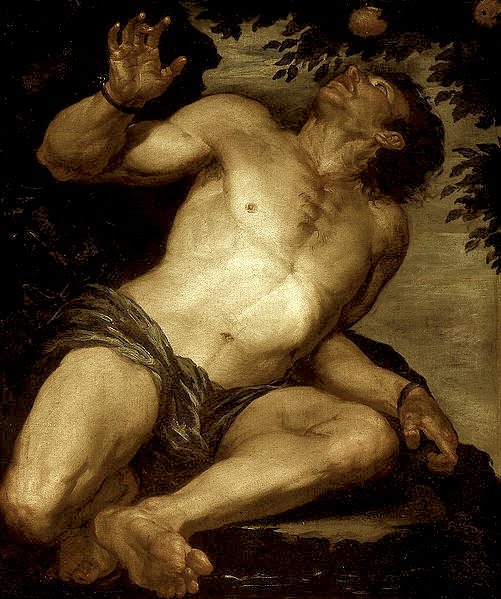
The same governance applies to statistics and present day interpretation. The H1N1 epidemic that never was more than a seasonal flu, caused a stir worldwide when the UN stepped-in and pronounced that it was a pandemic – a fearful crises. Sometimes in an effort to claim credit for a discovery humans push hard for their personal objectives. The long arm of Tantalus pulls at their collective thoughts makes them see what others cannot and in so doing in their fervor convince, cajole and circumvent and stifle contrary opinion. Once the fever pitch has reduced, a small blurb denounces the myth and the populace is happy that they all live in a clean and sterile world again.

                                 Painting of Tantalus (greed beckons)

To look at the manipulation of small numbers gives us a window into the larger numbers. For instance, if you have a salary of $100 a week and management reduces you by 50%, now your earnings are $50 a week. After a lot of brouhaha and media sponsored criticism, the management agrees to raise your salary back by 50%. Are you back to where you were? No. You are now making $75 a week, since 50% OF $50 is (50+25=75) $75 and not a $100. This is simple but accurate. If some one wants to hide facts they throw in percentages. Listen to the true numbers.

An example worth entertaining: Statins are the new vogue in town, professed as the cardiovascular disease “tamer.” All collective advertisements and the drug labels say that Statins may reduce the relative risk of a cardiac event by 38-46%. That is an impressive statement by any standard. Wow, I can eat the Twinkie and the Crème Brulee and the skin fat of the duck and take a pill without remorse. In fact many a cardiologists, I know go out for a big meal at a restaurant and on their way home pop one of those pills, :It keeps my cholesterol down!” they say. Really. So looking at the real patient numbers of five major studies of a Statin and subdividing them into a basket of 1000 patients for the Statin side and the placebo side gives us the following: 32/1000 patients had a cardiac event while 41/1000 in the placebo category. Add 32 to 41 = 73 now divide by 32 gives you a 43% Relative Risk. Interestingly the cardiologists having been so enamored of this pill have begun to believe in it handsomely, to the point that now they proffer that the “pill” reduces the risk of heart attack. Maybe it is the life-style change, diet change or whole host of advocacies inspired collectively in society that is coming to roost, or maybe it is the “pill” in some small way helping. Further investigating the issues of the side effects of the “pill” are listed as being a paltry 2%. The risks being, muscle fatigue, muscle pain, confusion and cognitive brain function disturbances and liver damage. But comparing 43% to 2% would seem very one-sided and in the realm of the advocates for the “pill.” Yet the 2% is an Absolute Risk and not a Relative Risk. If you were to give the Absolute Benefit from the pill then the answer is 41-32=9. And 9 divided by 1000 = .009% Oops! Here the Side Effects from the “pill” outweigh the benefits don’t they?

  Median means the status of the 50% of those tested.


 “Physiologists must never make average descriptions of experiments because the true relations of the phenomena disappear in the average.” - Claude Bernard.

Lets stay with medicine for a bit longer and look at how statistical manipulations can harm the psyche of the unsuspecting. The responses to therapy in oncology (cancer medicine) used to be categorized as Compete Response (All discernable evidence of disease obliterated or 100% reduction), Partial Response (Where 50% of the discernable disease by diagnostic tests such as scans and X-Rays was reduced) and Minor Response (Less than 50% reduction) Then suddenly one day entering into the 21st Century, the ivory tower decided that Partial Response would be changed to represent disease that had been reduced by only 30%. Why the change one asks? Well, you would show more responders in a study touting benefits of the particular potion and therefore the benefits would sound better and people would rave about it. Really? So instead of monkeying around with these response rates why not just look at Overall Survival Rate or OS. Now that hurts the manipulators! OS cannot be manipulated. Since, there is very limited progress in the absolute survival rates in three-decades does not mean that therapy has not helped. It has in mollifying the disease of cancer, caring for the sick and giving them a sense of wellbeing and chance to enjoy time. Unfortunately progress is not in the form of a giant leap but more in the realm of mini-steps. There is no need to make more of it then you should. Uncertainty is a fact of life. Manipulating to present it a certain way is the function of selfishness or self-righteousness, either way it is abandoning the truth. Unfortunately it is widely used by the media, you know, TV, Newspapers, Magazines etc. Mostly because either they don’t understand or don't really care because of compelling time constraint to put it on the editor’s desk. Unfortunately, it is also as mentioned, sometimes inadvertently used by the white coats for self-aggrandizement or by the government-types- you don’t say- for political messaging. Note I don’t use the word reasoning because to reason requires concept deliberation and understanding!

Another wrinkle in the pages of concepts is the correlation and causality issue. To muddy the waters in the pristine white sands of our thinking, I am reminded of a question posed by a ten-year-old: “Does listening to loud music cause pimple?” I mulled over that one for a while.


“Where did you hear that?”
“My dad told me.”
“The truth is that loud music through the ear buds and headphones cause a hearing loss but do not cause pimples.
“But he is right. My older brother and his friends have pimples and they listen to loud music all the time.” He whimpered.
“You see young kids love Rock bands and Heavy Metal which they listen to in high volume. But the act of listening does not cause the pimples. It only hurts your hearing.”
“But my dad says so…!”
“And he is right for you not to listen to loud music.”


You see the problem. This little boy was scared of the gigantic yellow-tipped angry-red pimples his sibling had and wanted no part of it, but he was conflicted with the causality to ask the question. This brings us to a problem of a Confirmatory Bias, where, if I had answered yes to his question to keep his thinking on the same track, he would go on through puberty in the dark about pimples and loud music. As one grows older one substitutes a different "governing power" for the "dad" and lives happily in fear.


My best friend told me in her youth she followed her father around in household repairs. While he was nailing down a board, she asked him, “Dad why does the nail bend every time you hit it with a hammer?” He answered, “It bends because you are talking too much.” After a while surveying the results quietly she asked, “Why does the nail bend even when I am not talking?”
“Darn, he said this finger keeps getting in the way.” Just like in truth, data keeps getting in the way of a fabled story with hastily built foundations.

The armchair analysis of any scientific study hastens to mind a smattering of causes, a mixture of bias, chance, inference, manipulation and motivation. In medicine since we deal with humans there are multiplicity of competing reasons to objectify a cause with aplomb. The science of medicine is not the same as the science of physics dealing with forces, speeds and vectors defined in units. Medicine does not lend itself to absolutes, it conspires to make stealthy attributes where none are expected and remove those attributes from somewhere else where they do not belong. 


The rudiments of statistical thinking however dates back to 1828 when Pierre Charles Alexandre Louis did some simple mathematical inquiry into blood-letting for pneumonia and infected patients and found that the widely practiced method had no beneficial effect but possibly a deleterious effect. The procedure was ended slowly as the word caught on. There was a minimum of correlational analysis contrary to our present day, where correlations are used to imply causation all the time. The more the analysis is reviewed by the experts in the Media and amongst the laity the more it earns itself a seat amongst the full-fledged irrefutable causes for the malady under review. With that everyone is happy that science has marched on and left in its wake another great victory. Not so fast, because the next turn in the road shows the fallacy of this incomplete link through correlation. Reality is vindicated eventually.


Medicine is indebted and also held in hostage by the brilliance of the bespectacled nearly blind, with full bearded pipe smoking man named Ronald Aylmer Fisher. Fisher could not read due to his eyesight and held most of his opinions through lectures and social communications. He learned to visualize with an imagination unlike any other through multidimensional thinking and came up with the concept of Randomization. This he acquired from W.J. Gossett of the Student t-test fame and merged the two processes of randomization and the t-test to come up with a scientific terminology called analysis of variance or ANOVA utilized widely in science. Unfortunately for all the mathematically developed scientific study method the foundation of proving the null hypothesis to be true is based on a 5% error. All medical studies are based on a CI of 95%. CI stands for Confidence Interval, which means that there is a 5% chance that, the observation of a difference between the studied drug and placebo or standard care or any other comparator is by chance and there is a 95% confidence that it did not. Putting that in perspective one would be hard-pressed to say it’s okay to take the bungee cord jump with a 5% chance of ripping the bungee cord and plummeting to death. I don’t think any one would take that chance, if it were true. Would you? Yet that is what all experiments in science are based on, the decisions of the FDA for drug approval and the studies conducted under the auspices of scientific rigor are based upon the Confidence Interval. In essence you are trying to eliminate 2.5% of the data from the left and right tails of the Normal Distribution Curve (Bell Curve)


Another pesky problem in medicine is that the burgeoning list of medical journals consist large number of published studies made up of small number of patients and therefore subject to question, as authors hurry to publish a result and be recognized. The problem with the small number of patient data reveals a world-class error in interpreting reality. Case in point was an ISIS-4 study that negated a Meta analysis of 7 small trials of 1301 patients proffering that intravenous Magnesium supplementation reduced the risk of death after a heart attack. ISIS-4 study with 58,050 patients randomized to with and without Magnesium, found NO benefit at a cost of millions of dollars. The small numbers with even a single death in one arm makes the other side “statistically significant.” And while we are at it, let me address the famous p-value. The statistically significant p-value of equal or less than 0.05 was Ronald Fisher’s hunch and not a mathematically determined end point. It just made sense to him. But he was dealing with mathematics and agriculture and not human lives. His hunch lives on and gathers more steam as time passes in the stream of humanity.

Imagine that a study showing a difference between 99.82% and 99.88% yields a benefit of 34% (p-value 0.003). The absolute benefit is 0.06%! It would take 1592 patients to show a single patient benefit! This would make for a splash in the medical journals touting the relative risk reduction numbers of 34% in the abstract and the headlines. The reality remains buried in small italics in the belly of the misleading beast if one has the time to review it.


Where is the Life we have lost in living?
Where is the wisdom we have lost in knowledge?
Where is the knowledge we have lost in information? – T.S. Eliot

You can see that manipulation of data to prove something is within the purview of statisticians and mathematicians nowadays to prove the expected bias that the scientist wishes to prove. Ouch! The tactics used nowadays is reductio-ad-absurdum. Reduce the information to its infinite parts and rebuild it to make a mountain out of a molehill (my definition).

In economics as in medicine along with other disciplines, there is a prejudiced view of thought labeled, ”observer bias.” Here one sees what wants to see and stacks the odds in his or her favor to the exclusion of the truth and reality. Therefore the very act of observation is prejudiced from the beginning to give the result that one has contemplated. Upon reaching the desired result, the cry of “Eureka!” is convulsively expelled for others to rejoice in the “discovery.” Thus the art and science of experimentation is corrupted to suit the thinking rather than the other way around.

                     Archimedes: the fulcrum and weight displacement

In reality and with real experimentation most brilliant departures from the norm are made through slow methodical and non-judgmental beginnings. The Archimedes “Eureka” was a boiling and brewing thought process that congealed when he stepped into the bathtub to displace water. 


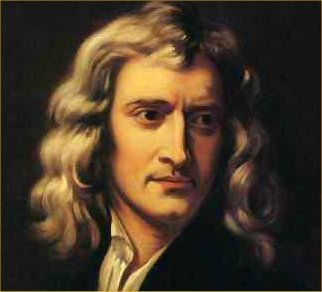
Newton and the apple, 

the Wright Brothers and the geometry of the wing following many mishaps before success was achieved, confirm the fact that innovation and progress is never made through manipulation or wanton misrepresentation of data. It is the slow contemplative advance till the thought has reached the perfect temperature to yield its virtues like the color of browned sugar.

Large scale Economics suffer from the same quakes that want to absolve the readers from all possible damaging thoughts. When things are going well and the economy is humming along at a fine pace, the demand for products goes up hence the price of the product goes up. Initially the company has to hire more people and the cost of labor has to be translated into the price and then the price maintained to yield a profit for the risk the company has taken. This therefore leads to a higher CPI (Consumer Price Index) and a PPI (Produce Price Index). Ultimately this translates to the rising cost of products, which leads to inflation. The government looks at the inflation rate and reports it monthly. But wait, when the prices are sky-rocketing and the fear that the dollar is not going far enough to buy the necessary amounts of the products, the government steps in to appease the masses by saying, we have to look at the “core” inflation which is ex food and energy. Oh okay. I understand. Maybe.

And then there is the quarterly ritual of the GDP (Gross Domestic Product) Why is always revised downwards after the initial figure? Because once the dancing and partying has ended the revised numbers are far away in the future to affect that past. The partying has already occurred. The moment enjoyed and so what is wrong with a 0.6% downward revision. Move on old chap, you say, don’t be a spoiled sport. Okay?


How about Stocks? Everyday the TV and most every Internet has a stock symbol look up price depicted with a green colored numbers if the stock went up that day or in the dreaded red color if it ventured down due to selling pressure. However if you are not a day-trader then the more important issue is to look for the fundamental and technical value of the stock price action. For instance if it is on a steady decline, but had an up tick on a certain day or week why get trapped there? If for instance a stock not paying any dividends languishes at a constant price, it is like parking your money in the mattress. 


Microsoft comes to mind; if you put money in MSFT in 1999 you would be down on your principle investment today even with the one time dividend! (Just the facts, I am not busting the great company that spawned work for thousands)


“Stars, hide your fires, let not light see my black and deep desires!” cries Macbeth in the face of dark reason. Yeah, there is plenty of light here if you are willing to flip the switch. The generators are humming with energy. So then let us begin with the issue of “Pay for Performance,” euphemistically written as P4P. What in the name of Sam does that mean? How does one contemplate performance in medicine? That patients with terminal disease if they are not cured then the treating physician has a poor performance record and therefore not get paid for services? 


Or for that reason a diabetic with four or five vessel disease and small coronary arteries cannot sustain the post operative recovery in 5 days and be sent home means that the cardiac surgeon has maybe rendered poor care? Or a General Practitioner has failed to prescribe the right medicine for a raging influenza and the patient succumbs to the disease? I mean some one is not thinking, the dark suits in the government maybe have never ever thought of the real issues in medicine.  P4P has hidden dangers written in bold all over it:  Rosenthal et.al JAMA 2005 (294) and BMJ May 2010 (340) articles view these implementations and their dangers.


An example in the United Kingdom where there was a performance related issue with “Ambulance Response Time” for emergencies. The day it was enacted the graph for showing compliance skyrocketed to the peak. Interesting and rapid compliance one would say upon viewing the graph and the newspaper would shower accolades and the National Health System government auditors would bask in their glory of ridding the pesky delays that cost human lives. What happened was manipulation of numbers by the ambulance drivers and the real emergencies got delayed as the less emergent patients nearby were recast as Category A. As a result the unintended consequences cloaked devil came out to play the pipe. What the policymakers do not contemplate are the unintended consequences. Exactly what they wanted to avoid – delays in emergency – happened and cost lives. And these issues of policy reliance on poor information are evidence at every turn of the screw. Those that reason, anticipate and those that anticipate also hesitate in proclamations. A fall from 10 feet above hurts the same whether someone says it is only three feet.

Oh and I can't let this one go. The latest buzzwords in medicine are “Evidence Based Medicine.” Sounds good. You are therefore making decisions on some collected robust data. Now for the three ring binder full of questions, what does one consider evidence? Does eating a high carbohydrate diet as proposed in the past by cardiology societies and the American Medical Association recommendations still apply? No!


Does heavy marathon running constitute good exercise for a healthy heart in face of contrary data showing excess calcium buildup due to trauma? (recent data)


And of course we would all laugh heartily if we were to recommend cigarette smoking to cure chronic cough – proposed in 1899 edition of Merck Manual. 


Then there is the amputation of the limbs to cure Pernicious anemia (that is why it is pernicious because the cause remained unknown and death rate was high) changed to eating raw liver and then regurgitated food products from a doctor to finally a Vitamin B12 sublingual pills and injections. And lets not forget the previously mentioned “blood-letting.” Medicine flows like the river forever changing its shores and its depth. To rely on the past evidence does not do a patient good when better treatment is available and as of yet has not met muster of the ivory tower crowd, but since the “evidence” has not been collected for writing articles it is withheld from patient care. Oh me Oh my! (Read Dr. Jerome Groopman and Pamela Hartzband's article on Evidence Based Medicine, "Why quality care is dangerous" in the Wall Street Journal 2005 @ http://online.wsj.com/article/SB123914878625199185.html)

The consummate skeptic is welcome into the statistical paradise as he considers this jungle of pitfalls with the questioning eye and makes the learned decisions. So there are a few lessons here for all of us: Reading the information with an eye towards the motives, Considering the methodological hiccups in the experiment, Counting the real numbers where percentages are used, Considering the differences between Relative and Absolute Risks and above all Questioning with the same word you dogged your father with, Why!

For Further Reading:

Innumeracy, John Allen Paulos, (Penguin 2000)
The Numbers Game, Michael Blastland and Andrew Dilnot (Gotham Books 2009)
How to Lie with Statistics, Darrell Huff (W.W. Norton 1993)
Biostatistics, The bare Essentials Second Edition; Geoffery Norman and David Steiner (BC Decker 2000)
Big Fat Liars, Morris E. Chafetz, MD (Nelson Current 2005)
Reckoning with Risk, Gerd Gigerenzer (Penguin 2003)

Tuesday, August 24, 2010

Wake Turbulence and Integrity


Landing behind a Boeing 737 in a small plane teaches you a whole lot of things but especially that trailing behind those big aluminum transporters one has to be cognizant of their “wake-turbulence.” I was 5 miles behind one and had projected a landing area just beyond the 737 touch-down spot. Yet as I descended below 200 feet there was a sudden un-commanded roll and pitch, the likes that cause you to open all pores in your skin and sweat in places that you never thought about. Luckily the roll stayed within 60 degrees starboard and the pitch was down 10 degrees. I controlled the feverish display before it could do me harm. I landed the aircraft safely. As the wheels touched the asphalt, the Tower chief chimed in on roll-out, “You okay?” Oh yeah I thought, sure, piece of cake. But the trembling had not even stopped for me to consider uttering the word, “huh?”


“Wake-turbulence,” sounds reasonably innocuous and at the same time full of potential jeopardy. Where it can strike we can barely anticipate but when, is a whole other story. 


Anyway, the Airport Lounge chair was cushy with foam and I sat there for a while rethinking my strategies for the future when aligning myself behind the big boys, you know, them airliners.


My thoughts ventured from aluminum to flesh and blood; us, puny humans.  Do we carry the same wake-turbulence to cause harm to others? Something that needed to be considered with equal gravity. How many times one reads or hears about someone suffering at the hands of another? Yes! that is wake turbulence, the kind that people like Madoff create. There are many others, far more evil in their deeds that have led millions of people to an early grave. The likes of Eichmann and Mengele come to mind. Some do it surreptitiously slowly plotting and planning the windmills of their personal desire to wreak a breezy havoc upon the unsuspecting individual, while others have figured out an end game replete with rewriting history to save their own skins while playing to the tunes of selfish desires.

And then there are those in the once-revered medical field who implant, transplant and replant falsehoods to better their careers only to churn an entire industry into chaos, confusion and splash the color black on the nobility of the scientific profession. The Duke University’s Dr. Potti and his colleagues awash with hubris, in an effort to glean publicity and reap the rewards of an ill-begotten experiment created another blemish on the medical wall, potentially inviting others to say, “If you cannot manage yourself, we will do it for you?” But Dr. Potti had left a wake-turbulence behind him of lies and deceit before; a forged scholarship. For those looking, the signs of an impending calamity were there. They would have seen his kind from miles away. But alas, nature is a constant teacher and the frailty of humans fails to learn from history and therefore is condemned to repeat the same mistakes.

The essence of a person is not in his words but in his deeds. Lest you think this is a man-made event, you would be wrong. Both genders participate in it handsomely.

So what is it in such an individual that makes him tock to everyone else’s tick? Can anyone recede to the same level given the circumstance? Are we all so fallen in our prejudices to do the right thing, that wrong is the path easily traveled?

The despair that comes from such a question is easily answered with one word; character. Temptations are plentiful in daily living. It happens in the remotest villages in Africa and Asia, lest you think this is the disease of a wealthy society. No, children are stolen and placed into bondage, infants are molested for adult purity and women are brutally beaten on the basis of inhuman laws. Men usurp other men’s land and property, killing and plundering as they go, tribes kill one another over height just like the Hatfield 

and the McCoys 


who either due to stolen hogs or in relation to the timber market in 1889 couldn’t get along well together and in the name of righteousness, power, control or some such selfish human failing. To think of such as weakness thus, is to give up on humanity, especially since the majority of people live their lives in quiet desperation never given to such temptations. They toil to receive their rewards and achieve their just potential. But for them, the fabric of society would not hold. The rip sometimes created by those that walk to a purely selfish and socially ignorant beat yields the dark and decay of the human spirit behind the imagined and beautiful tapestry called life.

Character is the overarching benchmark of integrity. It is integrity that leads the engine of this world and life into newer vistas. It is integrity of the sense of self that wounds the greed and self-deception. It is integrity of the soul that keeps the social structure sound.

So then how does lack of integrity create such a powerful wake-turbulence? Actually, both integrity and its lack cause similar wakes. The former is enduring and the latter smacks us in the face to remind us of our failings to learn from. The confluence of deeds of the past is a reminder of the future. Dr. Potti of Duke University fame had forged his resume. That is probably not the only thing to sting him from his past. Future will elaborate more of his inconsistencies. Harvard an equally prestigious University lays claim to a similar debacle; Marc Hauser a primatologist author to several peer-reviewed articles and a best-selling book admitted to “making mistakes.” His students at the university three years ago were raising this specter of untruths and concoctions as he persisted in his dogged determination to publish falsified data.


What about Adolf Eichmann who lived until 1962 when he was executed for crimes against humanity in Israel? He was a high school dropout, tried his stint as a mechanic and then a clerkship without leadership. He was a rudderless ship until he joined the Hitler’s SS and there obligated to the Reich and with sufficient leadership above him to turn him into a mass-murderer. A lesson for adults; always give children a sense of direction in morals and ethics and life.


On the other hand Josef Mengele was a smart quick wit with an intellectually curious mind that ventured often into the folds of eugenics and thus in creating the “ideal human,” allowed him to progress his ideas into committing mass murder under the blanket of his boss, Hitler of equal psychopathic ill repute. Mengele found the ideal setting under an ideal “boss” to experiment his "experiments".


Imagine a person, with a personality, “that would steal a dollar bill from the boss because the boss has all the riches and he (the boss) wont feel the loss of a dollar, mentality,” would do in a large corporation overseeing millions of dollars. Speaking of large amounts of cash brings us to Mr. Madoff. He of “bilking thousands of people off billions of dollars” fame, equally of hurtful and sociopath intent, used every human psychological trick in the book to endear himself to the trusting innocent. From rags to riches to rags is a flaw in the character that defines such people. For eventually the piper will play and one has to pay for such deeds of commission.

All deeds are not painted with the same brush strokes. Each poorly conceived deed devalues society with it’s own wrong. Yet all such actions have two things in common; human frailty of greed and self-service and the inflicted pain upon others.

Integrity is the cement that binds the empathic character. The wake from a person with good character lives on during and after him or her. This integrity of character is the enduring salvation of humanity, to succeed without reprisal. His or her deeds of a person of great integrity survive through time and color the present and the past with joyous memories for future generations.

The implications about any badness drawn concerning the Boeing 737 are false. 


This Boeing 737 aircraft has the safest of all records in flight second to the 747,


but it like other large aircraft has the mechanical trait due to its sheer size and pitch angle of attack on take-off and landing that creates a large vortex enhanced by the newly added winglets. As a matter of fact vortices are not restricted to large aircraft, a small general aviation airplane creates its own wake that would bring chaos to a butterfly. But these wake-turbulences are a necessary frailty of the physics of aerodynamics, no implied motivation.

Unlike aircraft where size matters, in humans however size does not play a part, in our species we watch for the wake-turbulence that follows an individual, revealing the poignancy of his or her character and the durability of their integrity.


A man named George many decades ago, crossed the Potomac and defeated the English colonists to establish the most enduring of concepts; a Republic.


He was offered the monarchy but true to his character and bound by his integrity he declined and stepped down after his term as the leader to live a commoner’s life. An enduring story of an enriched life, the wake from which will capture our imagination and lead us to that "shining city on a hill." so long as we remember history.