Thursday, March 31, 2016

THE WORDS


What is the intent?

What do they say?

Why the force

Why the fray?

Whom do they fear

Why do they scare?


Some churn

Others burn

Some play

Others slay

Sharpened edges

Blunted.


In metaphors

Hide, the flourish

In adjectives, intent.

Magnificent splendor

Wide open vistas

Wretched topography

Stakes in the ground, all bent.


Like calculus in a pebble

Strewn across

A muddy bottom

Holding memories

Deaf and mute

For another

To recreate, new vision.


Words indeed

Impeccably said

Artfully fashioned

Carefully articulated

Speak volumes

Of something,

Of nothing,

Of anything.


They speak

Of love

And togetherness

Of hate

And separation

Of deceit

And loss

Of innocence.
The force

Of a vowel

Changes the intent;

But the yielding quiet

Mutes any defense.


The eagle soars

Held down by a string

Widening the gyre

Till felled from exhaustion.

Anger spent.


That vainglorious beast

Perpetuating myths

of Indescribable events

Imagined briefly

To Ego's bent.


Yet all is waste

All for self

T'ill self is no more

Wasted time

Time Spent.

Washed away, listless

Second sweeps the face

Words injure

Mortality endures

Emotions inured

Life ends.
Time moves

Cycle begins


Hollowed thoughts

Words spent

Same intent.

Thursday, March 24, 2016

LIVES IN THE BALANCE


Clearly we are advancing human thought, most people would say. They would also extoll the virtues of love and feeling in the same paragraph if not as dangling participles. These are the many who add split infinitives just to (really) get into our minds. Metrics they claim are the virtue beyond all virtues. As if value has the same meaning as price. It is extolled in Yasmina Reza’s “Art” when a newly crowned wealthy man seeks eloquence through his acquisitions; a white canvas. The humor aside, it is telling about acquisitions; When “Scream” bids out as a mega-million winning lottery. The sham continues. Faces change but the human constance remains.


We ascribe relevance through irrelevance, as in value for price and intellect for wealth, although in the latter case it is certainly possible. Let us look at simpler model of understanding.

Education.

How do we test a person’s education status?

By the number of degrees he or she holds. The higher the education, the more intellect is perceived. The MD, PhD degrees hold a lot of gravitas or used to in the past. Today degrees are as easy as buying a piece of paper, since “No (one) can be left behind.”

And that brings us to how do we test?

There are expert “test takers” in our midst. Some have gone through the steep ladder of degree acquisitions by knowing and learning the art of passing tests. In fact schools teach the art of test passing and higher scores just so they can get grants from the Feds. Teachers teach the answers to the questions and student learn by rote of things they have absolutely no understanding. Test Prep schools compress the phenomenon even further to “enrich” the student’s mind with jargon filled answers that he or she will regurgitate when the doors are closed, the bell rings and the multiple choice questions are placed in front of her. “Yes, I know the answer to that, its “C!” By golly what a smart lass!

I remember a very smart test taker with degrees filling his pockets threatening to tear a hole in them. He was considered smart, very smart, actually intelligent or shall we say, brilliant. Ask him any question and he would answer, what are my choices? Given the “knowledge” he had acquired, one day he was faced with covering the Intensive Care Unit overnight without a backup resident. It was him and a slew of midnight nurses. Fortunately one of those nurses had years of practical experience. Lo and behold as midnight struck and the bells started clamoring, blood pressures started falling, oxygen levels bottomed, pulse-rates skyrocketed, sodium levels tanked and Potassium levels jumped, his eyes glazed over, muscles became flaccid and a strange thing happened. The resident was found wearing fear in the corner of the room without his booties, shaking from head to toe, fearful of  making any decision. The alert nurse calmed down the nerves of this poor bloke and slowly and steadily she helped with the answers to the horror that faced the clock’s hour face. The resident slept for the last two hours before sunrise in the corner in the Intensive Care with his head in his hands, buried behind his eyeballs in dreams of something or somewhere.


The trauma might have been excessive for him that night, because he resigned his staff position and went home to daddy and mommy. two years later he was working as a in-house Medical Director for a medical firm, barking orders about this and that.

Just as I said earlier, there is a gulf between “value” and “price,” there is difference between “test taking” and experiencing reality. Schools and teachers nowadays prepare little students and adult ones to “pass” a given test for selfish reasons; funding, advancement and tenure. Little students don’t know any better. So they learn what comes their way. The growing neural density, thirsty for information sponges nonsense as knowledge and a future of mediocrity is born.

This nonsense continues even at high levels of “education.” The certification process for physicians through the ABIM is a good case in point. I remember being at a conference in New York at a fancy hotel, where a fairly large room had been set up for breakfast before the educational seminar began. Sitting besides a luminary physician who held a significant power among physician intellectuals. The topic of re-certification came up and I heard him bemoan the fact that he was taking the re-certification exam a third time in three years. “The questions are so esoteric and stupid and have nothing to do with my specialty,” he exclaimed to nodding heads. And when you dig deep (as the saying goes) it is all about raising the "revenues" and the "net asset value."

There are lives in the balance all around us. Every action we take has some ripple effect. Physicians have this burden to bear, the hardest. The practical knowledge of experiential reference and learning daily on the job makes for a wealth of understanding, yet it is being discounted in favor of top-down guidelines based on population medicine.

it is worth remembering that all knowledge is not wisdom, only the applied version need apply there. Just as a child who understands the meaning of the word “lift” and “drag” will become a safer aviator. A child who understands resistance works to reduce it will work it out to deliver more electrical power at the business end of the wire, a physician who understands anatomy and physiology is better able to fix a pathology.


So you see dear reader, the current philosophies of Common Core, test taking principles, guidelines and mandates do not enrich the soul as real “actionable” (I use this word sparingly for fear of retribution) understanding. We must learn to unlearn the idiocy that has been mushed into our spongy brains. We must relearn the basics of understanding. And in the end…

The future will be brighter for all of us. For our children and their children. Lets all vow to stop the tyranny on the children’s and that of the physician’s mind!

Friday, March 18, 2016

IN SEARCH OF H1


Humans are constantly in search of meaning. “What is the meaning of this?” is a common refrain from an adult to a child while “what is the meaning of life,” is a common refrain in the mind of an adult. Somewhere in the what are you doing to what am I doing is our existence. We are constantly moved to making complex theorems while roaming in our mathematical world and are equally fixated with numbers when dealing with complex data. The long standing dilemma still remains much as we would like to shelter our eyes from it bright light, “Why do we exist?” On the other side the statisticians are constantly tweaking their assumptions to make bold predictions.


The world changes with every bit and byte of the unknown.

In 1965 the Medical world changed when Medicare “The Safety Net” for the elderly came into being. Soon thereafter physicians noting that accepting assignment and being paid directly from the Centers for Medicare and Medicaid (CMS) reduced the payment losses. It was the win-win zeitgeist of the era. Soon the aging populace, diagnostic workups and expensive therapies ballooned the projected expenditure for healthcare. With no skin in the game both the patient and the physician became secondary in the scheme of things. The patient wanted everything done (and lawyers made sure they held the doctors to that arbitrariness), the physician complied as the RBRVS rolled in, and both sides enjoyed the benefits. Soon electronics plowed into the mix and coding illness became the essence of care. Hospitals under the DRG realized coding ICD and CPT was a boon for their bottom-lines. The more the numbers of illness coded under each admission the better the payment. Specialty coding industries took seed and blossomed overnight. Experts pouring over the charts, crafting mechanisms to increase reimbursement per length of stay. In fact the lower the length of stay and the more coded maladies the better the scheme worked for the hospitals as well to garner a higher payment.

Realizing the increased outflow of the taxpayer money, the government set out to code the very patient-physician encounter adding “time” for each encounter and “eye-to-eye” contact as a means for payment mechanism. Failing this mechanism the concept of Electronic Medical Records came into being to capture the encounter in “meaningful” ways. The government initially paid 40 cents on every $1 spent by the physician for “going electronic.” This little venture cost the taxpayers close to $60 Billion and untold billions to the physicians and hospitals. Net result was that a few companies like Epic and Cerner with close ties to the government capital got wealthy overnight while silos of information grew without any interoperability between the many available systems. The physicians were now governed by the coding they did, the patient progress note now blossomed into several pages from the original intent of the SOAP as they copied and pasted with little meaning and by the amount of reimbursement that they might receive.

Meanwhile the patients continued to suffer as their physicians were forced into clerical work rather than clinical work. Disappointment and depression set in, in the medical community and physician suicides increased exponentially. The “abuse” of physicians through regulatory fiat dampened the core spirit of the physicians as larger and larger numbers left the physician workforce and a 125,000 physician deficit currently looms by the year 2025. Not to worry though there is a new body of online certified NPs and PAs to handle the excess load.

On the flip side of the healthcare clinical sector was the diagnostic and therapeutic industry under the influence of large publicly traded companies. The former built clinic centers near large densely populated areas to service the diagnostic needs and the latter produced an immense number of studies to prove their minimal incremental new pill was “significantly” better than the last one.


The null Hypothesis (H0 ) was under attack by the armies of statisticians hired by the diagnostic and pharmaceutical industries. H0 seemed not to have any backbone anymore. Any and most every study based on a few “Ns” seemed to defy H0. Nothing, it seemed was better than the new shiny box of pills.

Definition of Null Hypothesis: A type of hypothesis used in statistics that proposes that no statistical significance exists in a set of given observations. The null hypothesis attempts to show that no variation exists between variables, or that a single variable is no different than zero.

Suddenly all the attempted studies became insanely positive. Everything tested against the past, current therapy or a sugar pill was better. The pharmaceutical industry pressed new measurement buttons. The previously targeted Partial Response that advocated a 50% reduction in size of a malignancy as a consequence of therapeutic success, the experts in the industry now were comfortable with a 30% threshold. And the same experts who were content with Overall Survival that determined benefit of treatment X over treatment Y now were happy with the poor man substitute of Performance Free Survival (PFS). The measuring spoon size had shrunk. 


Everyone with a little bit of statistical knowledge jumped into the game. Another industry blossomed overnight. medical experts now abrogated their responsibility about discerning treatment benefits on patient using artificial assumptions to make things right in their “technical papers.” Many a professor’s tenure was made and many experts earned positions in prestigious universities all trying to outdo each other in the search of something called “significance;” The game of finding H1.

The statistical beast H1 had been unmoored, ripping its tightly bound chains and was roaming free in the wild. It tore through the countryside. It ravaged the poor vulnerable populace in its greed. The study of Epidemiology was bastardized and the p-value brought forth significance to everything that had none and meaning, where none existed. Logic it seemed had failed its own set of rules.

The world was spinning at a faster speed getting closer and closer to the Seneca Cliff, as Yeats’ words have come alive with force:


Turning and turning in the widening gyre   
The falcon cannot hear the falconer;
Things fall apart; the centre cannot hold;
Mere anarchy is loosed upon the world,
The blood-dimmed tide is loosed, and everywhere   
The ceremony of innocence is drowned;
The best lack all conviction, while the worst   

Are full of passionate intensity.

Wednesday, March 9, 2016

The ROMANTIC AGE of MEANINGs

We search for meaning...

In rocks and stones

In waterfalls,

In trees and bushes

With their birds n bees.


In images
Of lightening and rain

And through paintings
Of age old disease.

In war and peace

In anger and death
Through poetry and prose

In the grain of sand.

Peering beneath

In the atom of the cell
To find meaning

In Life itself!

Friday, February 26, 2016

CORRELATIONS: Canaries in the Gold Mine


I found these graph…and they are fascinating!

We live in a world where everything is quantified. Metric measurement is more than a pastime. It is the Present time. We long to find meaning within meaning and to decipher the basis of existence itself. So bent in this stream of consciousness, we find correlations that give us the necessary tools to go on. To go on where, though? Where is there, and why do we need to go there? Indeed, simple as this looks, the go-between prism of simple deception is embedded in this art of the present culture. Using a sophisticated illusion of coruscating colors and mathematical correlates a graph of believability and a propagandist, moralist and a prophet is born. A great enchanter uses form, style and the magic of his or her statistical genius to convince others.


What exactly does the first graph represent? Let us break it apart at the spine and unhinge the very concepts it purports to appoint into our consciousness. Or simply smash through the paper-lined facade!


On its face it is obvious; the U.S. costs is an outlier and as you traverse the landscape, you find that the costs do not equate to the life expectancy. “Oh my!” one would exclaim, “That is travesty!” But is it?


Lets break down the issues one by one:

First allow me to bring into focus the Life expectancy, of select countries data below to illustrate the point...

Country Life expectancy Median Age Birth rate/ 1000
Japan
84
47
9
Spain
83
42
11
Switzerland
83
43
10
Italy
83
45
9
France
82
41.5
13
Canada
82
42.1
11
Norway
82
40
13
Sweden
82
42
12
Germany
81
46.7
8
United Kingdom
81
41
13
Denmark
80
42
11
United States
79
37
14
Poland
77
39.6
11
India
66
27
22
Uganda
59
16
45
Sierra Leone
46
19
39


YELLOW: Birth rate/1000, GREEN: Median Age, BLUE: Life Expectancy

As you can clearly see based on these Life expectancy and Median age data that there is a correlation between the two. In other words as the Median age goes up so does the Life Expectancy. Makes sense, doesn't it?
The baby boomers in the western nations are aging rapidly and the advancement in science and overall Public Health measures have drastically reduced the early age mortality causes significantly. And that is a good thing. As the Median age advances a larger cohort of baby boomers will enter the next decade of existence thus raising the Life expectancy with it. See for instance the difference between the first 11 countries and their median ages and then the United States. It is obvious that as the median age increases to 42 that is 5 more years then the present the United States Life Expectancy will rise 5+ years as well, bringing it to the 84+ years.

See here: http://www.nationmaster.com/country-info/stats/People/Median-age/Total

There is another piece that needs to be fitted into the mix and that is the birth rate. Increasing birth rate leads to reducing the median age as the newborn pull on the median age to the left side a bit. If the birth rate in Japan and the rest of the European Union continues to decline as is evident today, (thus Germany’s need to import outside workers) and the median age advances more rapidly the Life Expectancy will rise even faster. Human beings survive not from seeking or taking medicines but from self-governance with healthy lifestyle. In the United States if the Birth rate continues to exceed that of the EU nations the median age will rise slower, hence the Life expectancy might take time getting to the Japanese Shangri La.

Now let us look at Costs:


In healthcare costs,  the United States is definitely an outlier. Of that there is no question. But what exactly is the genesis of these high costs. Is it Medical Care? Is it the cost of examination, interpretation, treatment (Medical and Surgical) and management of acute and chronic illnesses? There is the essence of the economic costs breakdown…


If one looks at the Bureau of Labor Statistics, one comes to an understanding that the direct increase of costs is something other than those issues outlined above. In this graph the real increase in costs seems to be the middle management that promulgates policy and oversees such policy measures and not direct patient care itself!  It appears that there are way too many overseers, who do little except to keep their own job secure. 


Do you still think that the Cost of healthcare is correlated to the Life Expectancy to the extent advocated by the "experts"? Still? Not convinced yet?

The argument posed by the middling managers is that physicians are not to be trusted in providing good medical care therefore the need for such oversight. Really? How exactly does the oversight help? Apparently if one were to use this argument then the cost of care has really not budged the needle in the direction they themselves think it should have.

Is that the failure of their argument?

Given another decade or two the median age in the United States will climb due to the booming boomers, will these experts claim that their measures in healthcare policy have lead to a increase in Life Expectancy and therefore their presence is justified, appropriate and necessary? All one has to do is look at the evidence and then figure out the bogus nature of the argument. Yet look a decade ahead and if business is as usual, the headlines will proclaim their pseudo-virtue.

And then there are the Insurers...
As long as the premiums can go up and capital outflow can be kept to a minimum by denials of claims and delayed payments, well then life is good until it no longer is...


The thread still finds the needle to sew the perfect fabric; Risk nothing and Reward from everything as in this graph below...

If you were thinking that there might be a correlation between the Consumer Price Index (in Health) and the Health Insurance premiums? Well you guessed it, there is... But oh there is a divergence, how can that be?

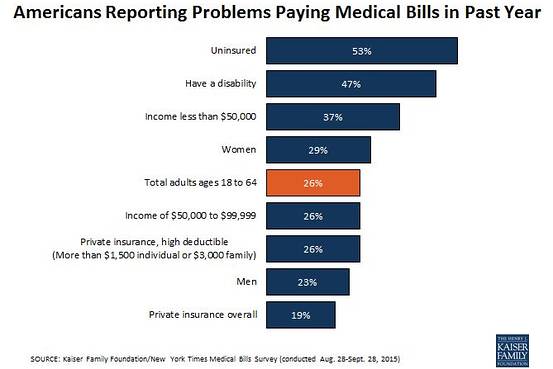
Is there any wonder that the middle class average U.S. citizens are having a real problem in meeting there medical expenses...

There are a varied number of graphs about healthcare system waste...here is one of them:


But they seem to point to the flagrant increase of physician incomes. Is that so? Look here...


There seems to be discrepancy in what they, the experts and middling managers at some private, political and governmental levels, say about how the physicians are the cause of the whole healthcare cost problem and yet there is this...


The graphs below are interactive and show the overall decline in the young population and a rise in the elderly population and various OECD nations. Enough said!

Now you must be able to see that the canaries in the gold mine are the patients and their physicians. While the miners are wearing top-hats!


Saturday, February 20, 2016

A CURIOUS CASE OF OPPORTUNITY COSTS


Opportunity Costs of Free Capacity

I find the business terminology interesting. So before much ado, let me define the two terms to make what follows easier to explain.

Definitions:
Opportunity Costs:  The loss of potential gain from other alternatives when one alternative is chosen
Free Capacity: Portion of resource-time not allocated to any customer's order or job.


Private companies are fairly efficient in utilizing their employee time, unlike the public domain. Private companies have to concern themselves with the loss of opportunity if they choose the wrong path, widget or product in the market place. The loss of time, resource and space in that exercise could easily have been utilized in another far more lucrative endeavor. This then is the essence of opportunity costs; costs that could have been put to better use for better outcomes.

Private companies also use their Free Capacity to enhance their productivity. This can be managed by fostering higher education for their employees, seminars in efficiency, seminars in personal resource management, seminars in six sigma, etc. All these mechanisms are designed to help an employee grow in the company and achieve better results both in productivity and quality of the product the company produces.

In these product or productivity improvements lies the inanimate material molding to form a widget but not the currency of a living body’s mechanisms. Now let me take you into the discipline of medicine where the business industry has taken over the nobility of this profession but in the process has forgotten its own all important tenets.

A physician’s Free Capacity is mostly diverted into thought and then into action. The former precedes the latter in time. Physicians on the whole while taking caring of their patients spend an inordinate amount of time thinking through the process of the pathology within the patient and the nature of the nurture that has transformed that patient’s condition. This thought fills the crucible of a physician’s wisdom. The action that emanates from the rising ethereal wispy clouds of thought is the essence of the care provided to the patient. Every patient is a different dilemma, even though he or she may have the same type of illness; a diagnosis of pneumonia or appendicitis or diabetic vasculopathy or cancer. How to treat is an amalgamation of the resources, a collection of evidence a musing over possibilities and potential of probabilities and the collection of experiential wisdom over time I mentioned earlier. This then is the Free Capacity inherent in the limits of a physician’s time. There are no “reimbursements” for this Free Capacity, no logs to fill, no boxes to check. It is Free Capacity because it is the motion of internal thought unencumbered by wasteful moments. This is the healer at work. This is the maestro directing the orchestra with the many shades of nuance within a symphony. This is the batter in the batter’s box waiting for the pitcher’s delivery.


Now we add to the physician’s lair a multiplicity of useless arguments; filing for preauthorization from the insurance companies to better understand the patient’s pathology, filling forms, clicking on the computer, checking boxes, copying and pasting data, spending time arguing with insurers for getting paid for services already rendered, adjusting for denial claims, wasting time over audits, meeting the challenges of “less is more,” and “Choosing Wisely,” or wasting time for a continuous certification requirements as mandated by the ABIM (American Board of Internal Medicine) with purported potential detriment to the patient and the physician. You might see that there is opportunity costs related to this wasted time. That the opportunity cost here is huge; it is the very immersion of thought in the patient care itself that is being violated. It is what makes us physicians, physicians. It is what defines us as humans. Inordinate and unnecessary burdens leech out strength eventually. 


Something will have to give!

Consider then that these useless actions as mandated by the experts who in large part also happen to be in the business world, are promulgated by the very people who define efficiency.  They are stifling thought in search of nirvana health based on a binary concept of good and bad. They are placing burdens on both patients and physicians and then using arbitrary metrics of “value” and “quality.” The very attempt distills down to dollars and cents, because that is what business people do best for themselves.

Somewhere the train of thought has been derailed. The last champion of the thinking mind is rendered a voiceless dregs of the society. Such continuous fatigue leads to wistful despair. The enterprise of form now controls the engine of function.


“With this regard, their currents run awry, and lose the name of action.” - Shakespeare

Monday, February 15, 2016

"TREAD SOFTLY..."


Somewhere in the outskirts of time, when shadows were short and dreams were long, a man came to me. He was looking for solace and comfort. he stayed a long while. He was a mild mannered man with graying side burns, a full head of hair and a quick easy but soft muted laughter. The timbre of his voice varied to the moment of his thought; from a quiet whisper to complete domination of a four walled chamber. He had a limp, a slight one on his left side and his body tilted a little in that direction. He was neatly dressed and always through the time I knew him, he presented himself as a perfect gentlemen. But when he spoke, oh my, when he spoke, he could mesmerize you. The gentle cadence in his voice and the impeccable words that he used arrested any thought of arrogance within his eyesight.

He told me, he had a “malady of sorts, something to do with the blood,” he recalled. I studied his documents that he had proffered and found the riot in his blood that had him seeking solace. The riot was a white cell problem; the plasma cells had overtaken the production machinery in his bone marrow. His, was producing a variant of the white cell called “plasma cell” from a renegade template. This wayward production was overtaking the capacity of the other normal cells that were needed for normal daily living. The dysfunctional clone of plasma cells were on a rampage, unwavering and resilient. And so he grew weaker in the flesh but stronger and more focused in the mind as the white cells took over and made him weak from the relative paucity of the red blood cells.

But that was many years ago. We, he and I, had reversed the process and contained the plasma cells from growing in their manic phase and checked their growth and contained them much before their prohibitive limit. He would come periodically and I would pat him on his back after studying his blood under the microscope. We elected to reserve the bone marrow testing only when there was an absolute change in his condition warranting it. The now had recently happened.

He was single, never married and lived quietly in a modest home. I visited with him one day on his invitation, to find a catalogue of literary books and models of schooners, sloops and ketches adorning his living room; a modest small room with sparse furniture, except for the heavy wooden book cases that travelled across the walls into different rooms, filled with books.

The day had come for decisions and he being weak and frail required the “mountain” to come to him, as he called it. We sat awhile quietly, both taking in the ambience. He thanked me for coming and offered me a beautifully constructed model of the HMS Victory as a token of friendship. I declined. He said, I realize my time is short now, but I do have an important piece of work yet to finish. And then in a quiet but audible whisper he said,

“I would spread the cloths under your feet:
But I, being poor, have only my dreams;
I have spread my dreams under your feet;
Tread softly because you tread on my dreams.”

Perplexed with the choice of the quote, I looked up at him. Had I trampled on his dreams before? had I not done everything based on his wants and needs? He looked at my discomfiture and said, “Thank you doctor, my friend, you have given me comfort and many years of good living. I just want to live for a short while more, till the end of the year to finish a project.” I hurried to alleviate his anxiety and he held up his hand slowly but determinedly. “I know, I know, what you will say, for it is difficult for you to lose a friend as much as it is for me, but promise me comfort for the remainder and nothing more.” I promised.

We had tea that he prepared in a teapot, letting the tealeaves simmer in the heated water bubbles, lending the entire agency the color of rust and the aroma of far away places. He poured the tea with a slight tremor in his right hand. He limped slowly across the room and would not take any assist from me. He sat down finally a little shy of half his energy, but his eyes remained alert and piercing, shaded below the overhang of his thick eyebrows. He looked steadfastly at nothing in particular, staring at the books in the bookcases. We sat sipping from our respective cups in silence until he broke with his voice,

“From this day to the ending of the world,
But we in it shall be remember'd;
We few, we happy few, we band of brothers;
For he to-day that sheds his blood with me
Shall be my brother…”


He smiled and then continued, “Henry the fifth does use some… rather deliberate and provocative words like bloodshed, doesn't he?” he questioned and then momentarily continued, “But you are a brother to me on this, my Saint Crispin’s Day and for that I thank you.”

I left his house that evening, filled with anguish and with a strange feeling of comfort. The anguish about a promise that I had to keep and the comfort from finding such peace in the way he wanted to spend his last few days on earth by inviting me, his physician, into his house and calling me his friend.

He died several weeks later when the shadows had lengthened and the air had turned crisp with clarity and speed. He remained home in the comfort of his bed surrounded by the love of his life, his books.

I remember him, his dignity in life and dying, in the quiet resoluteness of his determination through the turmoil and chaos of the disease and in the comforting, unwavering peace of his decision. He was a remarkable man, worthy of emulation of his kindness, eloquence and simplicity. He left behind his fortune to his relatives, to the local library and to his alma mater. It was a large sum, as mentioned in a publication from the university.

I remember to this day, a lesson he taught me that repeats in my mind, when I see a person in distress, his voice gently echoing W. B Yeats, “Tread softly because you tread on my dreams.”